« on: February 16, 2025, 11:50:18 PM »
GET A STRONGER GRASP OF FREQUENT ENGLISH GRAMMAR MISUSES(Fourth of a weekly series) February 18, 2025To further reinforce your English grammar footing in 2025, Jose Carillo’s English Forum is running every Tuesday starting last January 28, 2025 a series of very common English grammar misuses even by not just a few of its native speakers. This week we’ll continue the series by clarifying 6 more such misuses (19 to 24) from about 480 that have been taken up in the Forum’s Use and Misuse board over the years, mostly in response to questions raised by Forum members and readers.19. “Should an object agree with its modifying possessive adjective?Forum member Mioorphosed posted these intriguing grammar questions: “I read these two sentences in a teacher’s manual and got confused: “Guide the pupils in making their portraits” and “Guide the pupils in making their portrait.” Which of them is correct? Should I consider the nature of the object here, whether noncount or count noun, when deciding which possessive adjective to use?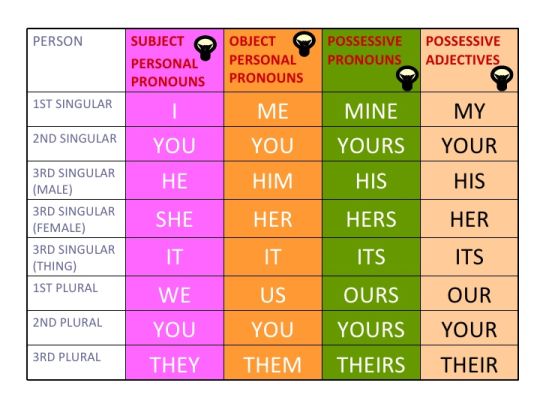
(1) “Guide the pupils in making their portraits.”
(2) “Guide the pupils in making their portrait.”
(3) “Guide the pupils in making his portraits.”
(4) “Guide the pupils in making his portrait.”
(5) “Guide the pupils in making her portraits.”
(6) “Guide the pupils in making her portrait.”
The sentences above clearly show that the possessive adjective is independent in number from that of the object it modifies. Also, we need to find out precisely to whom the possessive adjective refers, for it’s possible that the subject could be someone or people not even mentioned in the sentence itself. In fact, it sometimes can only be inferred from the preceding sentences of the exposition.20. “The need for tense shifts in cases of clause dependency”The predominant school of thought appears to be that a sentence should have no tense shifts at all. On the contrary, however, tense shifts in English aren’t undesirable at all and shouldn’t be deliberately avoided. What must be avoided are inappropriate tense shifts.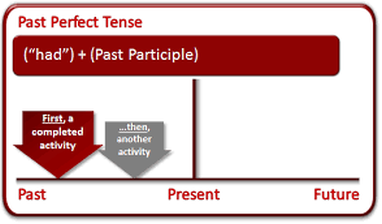
(1) If the statement is about events or action happening at different times, a different tense with the appropriate verb form should be used for each event or action. Take this sentence: “I am writing in my diary how it was before I met you.” “I am writing” is in the present tense, and both “how it was” and “I met you” are in the past tense.
(2) If the subordinate clause is about something in a permanent state or condition, or about something that began in the past but continues to the present, the present tense should be used in that clause no matter what tense is used by the main clause. For example: “Ptolemy believed that the Sun revolves around the Earth.” “Ptolemy believed” is in the past tense; “the sun revolves around the Earth” is in the present tense.”
(3) If the statement directly quotes someone, the tense of what was said shouldn’t be changed to agree with the main clause. For example: “Monica said just now, ‘I will fly to Singapore tomorrow with or without you.’” We really can’t fool around with the tense of the clause inside the quotations. When stated as an indirect quotation, however, the sentence becomes this: “Monica said just now that she will fly to Singapore tomorrow with or without you.”21. “The lure of the inverted pyramid”The lure of the inverted pyramid is an art form that’s actually no different from that developed by newspaper reporters for most of their front-page stories. Its secret is this: it first tells you the ultimate result of any chain of events, rather than giving you a blow-by-blow, chronological narration of the events and the developments that led to the outcome. It is very much like putting reality on a headstand, which of course looks like a very unseemly and unnatural thing to do, but it works. The Forum posting for Item 21 shows a detailed example of inverted pyramid news reporting compared to the upright chronological narration of a board meeting and the developments that led to the outcome.22. “Avoiding sexism in our English grammar” Forum member Miss Mae raised this question: “I just would like to know your opinion about using both ‘he’ and ‘she’ as pronouns for a third-person subject. Some media outfits still use only ‘he’ when the third-person subject is unknown, and I’m still getting you-must-be-a-feminist stare whenever I decide to just use ‘she’ in some of my writings. What should I keep in mind?”
The easy way out is, of course, to use the “he or she” form, as in “A trustworthy lawyer is he or she who respects confidences,” or the “his or her” form, as in “Everyone is entitled to his or her opinion.” This is fine if you’ll use the “he or she” form or “his or her” form only once or at most twice in a typical page of written work, but it could grate on the reader’s nerves when repeated several times.
One more thing: You need to be extra-sensitive to the need to avoid gender bias even in less obviously gender-skewed sentence constructions. For example, you need to cultivate the art of avoiding writing or saying, “Everybody is enjoined to bring his wife to the club picnic this weekend.” The gender-bias-free construction for that sentence is, of course, “All are enjoined to bring their spouses to the club picnic this weekend.”23. “What’s the correct usage of the anticipatory clause?”Forum Member jerbaks posted this question:
What’s the correct usage of the anticipatory clause in the following sentence:
He told us ________ one man and six women applying for the job.
(A) there was
(B) it was
(C) there were
(D) they were
Some say it’s A while others choose C. Which is correct?
The continuing debate between the prescriptivist and descriptivist positions for the usage of the anticipatory “there” clause is what makes the test sentence you presented unsuitable in English grammar tests. The prescriptivists will always invoke the subject-verb agreement aspect to support their position, while the descriptivists will always invoke the need for natural sounding and euphonious sentences regardless of that subject-verb disagreement quirk. I doubt that they will arrive at a common ground sometime soon.
The Forum posting for Item 22 explains in some detail the prescriptivist and descriptivist positions for this debated usage of the anticipatory “there” clause.24. “We need to banish ‘irregardless’ from our English vocabulary for life” There was a lovely Filipina guest on a local TV show who spoke English very fluently and persuasively. Watching her made me wish that all Filipino TV talk-show hosts and newscasters could speak with such unaffected English diction! Midway through her spiel, however, I heard her say a word that shattered my admiration. “Irregardless of what happened during the awards night,” she said, “the members of the movie industry should forget their differences and close ranks so they can move forward.” IMAGE CREDIT: I.PINIMG.COM/ORIGINALSThe two negatives that flank the word “regard”—the ir- prefix and the -less suffix—cancel each other out to yield a positive meaning. Recall that the prefix ir- before an adjective whose first syllable is “r” means “not,” and the suffix –less after a word means “without” or “none.” “Irregardless” is therefore not the same as “regardless,” which means “without regard or consideration for,” “in spite of,” or “despite.”Watch out for the 5th of this series next Tuesday (February 25, 2025)!
« Last Edit: February 17, 2025, 01:30:00 PM by Joe Carillo »

Logged


