Recent Posts

Pages: 1 ... 7 8 [9] 10
81
PLAYLIST UPDATE FOR OCTOBER 19 - 25, 2024 OF JOSE CARILLO ENGLISH FORUM’S FACEBOOK GATEWAY

Simply click the web links to the 15 featured English grammar refreshers and general interest stories this week along with selected postings published in the Forum in previous years:

1. Getting To Know English Better: “Using broader meaning and summary words”


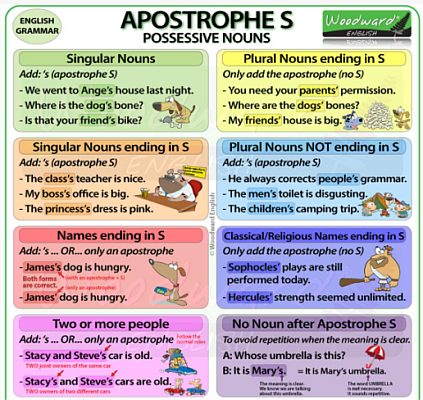
2. Use and Misuse: “Avoiding awful misuses of the English possessive”


3. Badly Written, Badly Spoken Retrospectives: “A turgid mix of bureaucratese and legalese”


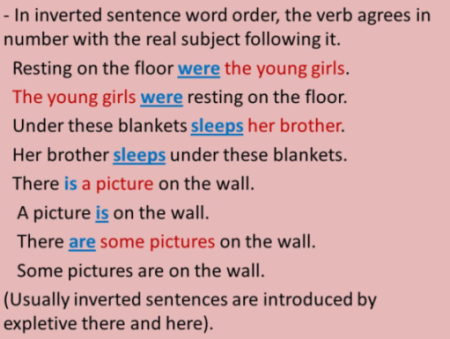
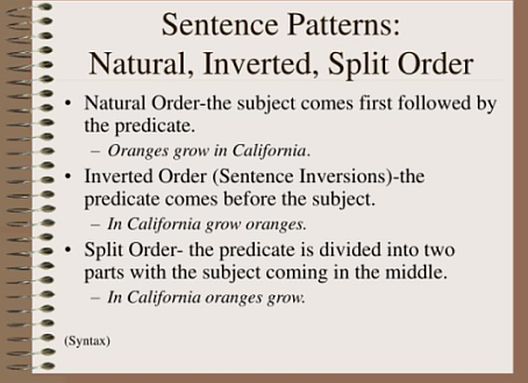
4. You Asked Me This Question: “Inverted sentences have a subject-verb agreement peculiarity”


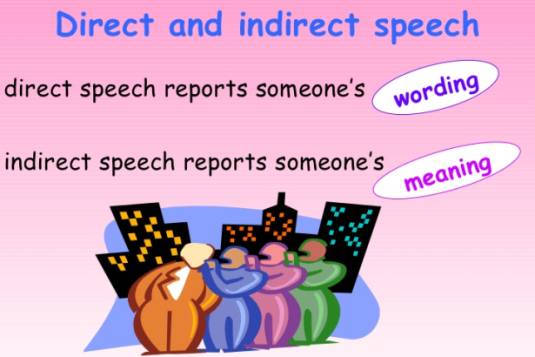
5. Getting to Know English Better: “A full-dress review of reported or indirect speech”


6. Essays by Jose A. Carillo Retrospective: “When even the passive voice isn't enough”



7. My Media English Watch: “When sunset comes and evening ends really depends on location”


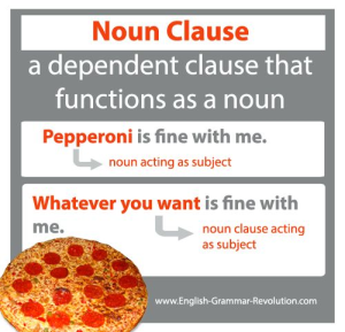
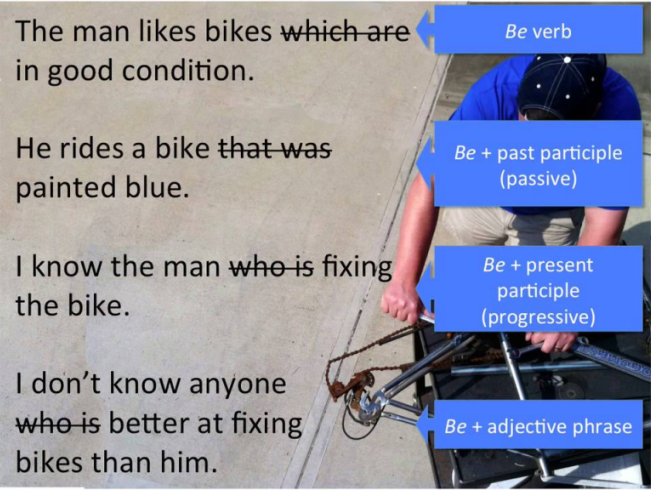
8. Students’ Sounding Board: “Distinguishing noun clauses from adjective clauses and adverb clauses”
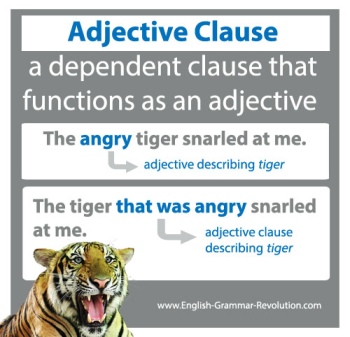
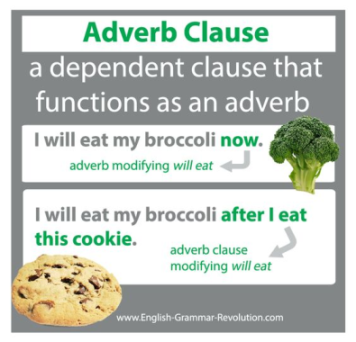

9. Language Humor At Its Finest: “30 famous thoughts by astute minds”


10. Education and Teaching Retrospective: “The Ant and the Eagle--Rizal and Philippine Education,” essay by Forum Member Eduardo (Jay) Olaguer


11. Your Thoughts Exactly: “Flowers for the Living,” personal remembrance by Antonio C. Go, Forum Contributor  



12. Time Out From English Grammar Retrospective: “Measuring up to the human body’s perfection in architectural terms” by Toby Lester



13. Education and Teaching Retrospective: “Private sector initiatives to upgrade Filipino teacher quality”



14. Advice and Dissent: “The Roman Empire was built on infrastructure awaiting a pandemic,” a review of Kyle Harper's The Fate of Rome



15. The Forum Lounge: “The Unbearable Costs of Becoming a Writer,” personal essay by young novelist Nicole Chung in Esquire.com




82
Getting to Know English / Using broader meaning and summary words
« Last post by Joe Carillo on October 22, 2024, 10:07:59 PM »
A major virtue of good writing is the way it moves smoothly from one sentence to the next, using appropriate reference words to guide readers along the way and keep them from getting lost, and summarizing major points every now and then to make the readers better understand what’s being said.

We have already taken up three strategies for achieving this: the use of reference words to avoid overuse of the same words, and the use of repeated action and sequence words. This time we will add two more to our arsenal of good writing strategies: the use of broader meaning words or phrases for particular words used earlier in the composition, and the use of summary words to clarify or emphasize the nature or context of various subjects that have just been discussed.


Using broader meaning words. This is an excellent technique for avoiding the overuse of the pronouns “he” “she,” and “one” in place of singular words designating people; the overuse of “it” in place of singular words designating objects and idea; and the overuse of “they,” “them,” and “these” in place of plural words. As we all know, these pronouns are handy substitutes for their antecedent nouns, but they are rhetorical dead-ends, offering no new dimension, attribute, or insight about their antecedent nouns. It’s therefore not surprising that overuse of these pronouns invariably makes prose tedious and boring.

We can greatly perk up our prose by replacing these no-content pronouns with content-laden words that represent a broader set of their antecedent nouns. Take, for instance, the following passage that’s chockfull of the no-content pronoun “they”:

Eagles are large predatory birds that belong to the family Accipitridae. They are noted for their strength and keenness of vision. They have solitary habits and are widely known to mate for life. They have remarkable powers of flight. They have wide wingspans that could reach up to 7½ feet, and beaks that grow nearly as long as their heads. These have made eagles the fighting symbol of the ancient Romans as well as the symbol of royal power through the centuries.”

Now see how that passage gets much livelier and interesting when the pronouns “they” are replaced with broader meaning words or phrases:

"Eagles are large birds that belong to the family Accipitridae. These majestic birds of prey are noted for their strength and keenness of vision, have surprisingly solitary habits, and are widely known to mate for life. Fearsome in their beauty, these stately flying machines have wingspans that reach up to 7½ feet and beaks that grow as long as their heads. All of these attributes of power have made the eagle the fighting symbol of the ancient Romans as well as the symbol of royal power through the centuries.

We can see from the above example that we can greatly improve the texture and tonality of our prose by replacing particular nouns with more general noun forms or phrases when subsequently referring to them, taking every opportunity to qualify those antecedent nouns and give more information about them.

Again, just to make sure the technique is properly understood, the pattern is to go from the particular noun as the lowest subset to increasingly broader, more detailed noun forms. Take this train of broader-meaning phrase changes from a particular noun, say “Gov. Filoteo C.”: "highly popular politician,” “an overly ambitious candidate,” and “this shameless political turncoat.” 

“Gov. Filoteo C. impressed me with his intelligence and apparent integrity. The highly popular politician has cultivated the image of a principled individual over the years, always taking the honorable even if unpopular position. But as an overly ambitious candidate of a new political party that's covertly funded by a notorious drug smuggler, he has finally shown his true colors. This shameless political turncoat no longer takes my fancy as someone deserving of anybody’s vote."

Using summary words. Another way to clarify and emphasize the context or nature of various subjects previously taken up in a composition is to use appropriate summary words for them. These summary words are generally single-word concept nouns that capture the essence of what has been earlier presented or taken up, such as a “situation,” “predicament,” “process,” “procedure,” “measures,” “solution,” “characteristics,” and “developments.” These words serve to sum up for the reader what has been discussed and put a sense of completeness and closure to the discussion.

Consider the following passage as an example:

"The village council finances were in disarray. Bills for streetlights and garbage collection had remained unpaid for months. The village streets were horribly potholed. Vacant lots were strewn with mounds of trash and overgrown with tall grasses. And the council members themselves were at war with one another. This was the situation when the new chairman took over the leadership of the village council."

Note how the word “situation” at the tail end of the passage succinctly summarizes and puts closure to the highly varied ideas presented by the five sentences before it. We can use such summary words to advantage every time we need to wrap up particular points in our own compositions.

This essay, which first appeared in my weekly column “English Plain and Simple” in The Manila Times, subsequently became Chapter 57 of my book Giving Your English the Winning Edge, ©2009 by the Manila Times Publishing Corp. All rights reserved.

Read this essay and listen to its voice recording in The Manila Times:
Using broader meaning and summary words

Next week: Using demonstrative reference words        (October 31, 2024)

Visit Jose Carillo’s English Forum, http://josecarilloforum.com. You can follow me on Facebook and X (Twitter) and e-mail me at j8carillo@yahoo.com.
83
Site Announcements / My Silent Fire Retrospectives - Batch 4
« Last post by Joe Carillo on October 20, 2024, 03:58:32 PM »
October 20, 2024

Dear Forum Member and Friend,


The Forum is pleased to post the Fourth Batch (the last batch) of its retrospective of 12 selected Silent Fire columns--three columns per batch--that started last September 29. The retrospective is being presented for the benefit of very young English-language learners and very busy adult learners at the time who had likely missed reading these columns.


The Fourth Batch consists of the following three Silent Fire columns that appeared in the Campus Press section of The Manila Times in 2008-2009:

10 - “Clichés and bad body English”
11 - “The proper uses of ‘they’ and ‘it’”
12 - “The rocky road to idiomatic English”

To access and read all of the above columns in Batch 4, click this link: https://josecarilloforum.com/forum/index.php?topic=9166.0

To read the columns in the earlier three batches, click these links:
Batch 3: https://josecarilloforum.com/forum/index.php?topic=9162.0
Batch 2: https://josecarilloforum.com/forum/index.php?topic=9156.0
Barch 1: https://josecarilloforum.com/forum/index.php?topic=9150.0

I wish my Forum readers and friends all the best in their continuing quest for better English!

With our best wishes!
Joe Carillo
84
Silent Fire Retrospectives / My Silent Fire Retrospectives - Batch 4
« Last post by Joe Carillo on October 20, 2024, 12:07:38 PM »
My Silent Fire Retrospectives - Batch 4
By Jose A. Carillo

Silent Fire was my Saturday column on English usage in The Manila Times from 2008 - 2009, completing what used to be a six-times-a-week run of my English Plain and Simple columns during the first two years of its continuing 18-year-run to date. This is the fourth and final batch of the retrospective series of 12 selected Silent Fire columns—three columns per batch that started last Sunday, September 29. They are being run primarily for the benefit of very young English-language learners and too busy adult learners at the time who had likely missed reading them.

Feedback about the English grammar critiques presented in these columns would be most welcome.


10 - “Clichés and bad body English”

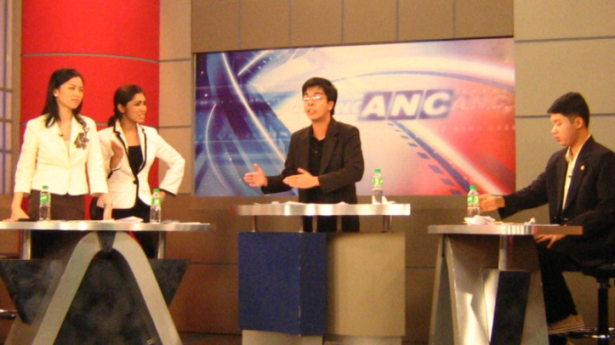
My two sons, 21 and 14 years of age at the time, had been watching with keen interest the ongoing series of student debates on ANC, “Square Off.” As you may already know, that TV show pitted two-person debating teams from various universities and colleges, with the young speakers taking on the roles of their adult counterparts in the Philippine Congress in debating various highly controversial issues.

I really couldn’t find fault in the English of most of the young debaters, whom I presumed were among the best and most articulate from their respective schools. Despite the pressures of time and competition, their speeches would generally be free of such language scourges as footloose modifiers, mangled idiomatic expressions, subject-verb disagreements, wrong pronoun usage, and frequent misuses of prepositional phrases and prepositional idioms. And on the whole, I think, their English pronunciation and accents were generally beyond reproach as well.

But as my two sons were quick to point out whenever we had the chance to watch those TV debates together, the body English of many of the debaters often left much to be desired, and their overuse of such clichés as “at the end of the day” and “at this point in time” could be so infuriating at times. Often, in fact, my sons would urge me to write about those things in my Manila Times English-usage column in the hope that the message would somehow reach the debaters.


STOCK PHOTO OF ANC “SQUARE OFF” DEBATES - FOR REPRESENTATION PURPOSES ONLY

One time my eldest son said, a pained look in his face: “Look at how that debater endlessly chops the air with both hands, Shouldn’t his coach remind him that he’s not in a karate competition?”

“Well, son, that mannerism is part of his body English,” I said, “and I’m afraid that none of my English-usage prescriptions could correct it. Only a knowledgeable public speaking trainer or trusted friend can wean him from it without shattering his self-confidence.”

“But what about this girl who seems to be always sneering at her opponent?” my younger son asked me another time. “Doesn’t she realize it’s bad form to sneer in public, in full view of the TV audience at that?”

“You’re right, but she probably isn’t even aware of it,” I explained. “That’s the problem with TV—it’s a terribly cruel medium. That habitual facial expression of hers probably won’t even be noticed if she were debating onstage in a big school auditorium, but it gets magnified when the TV camera does a medium close-up of her. Somebody has to call her attention to it, though, and she would need a lot of facial practice in front of a mirror to get rid of it.”

“Now look at this guy, dad,” my elder son butted in. “Why does he keep on obnoxiously repeating ‘Ladies and gentlemen’ or ‘Madame Speaker’ in practically every sentence of his speech? He must have used it a dozen times already in three minutes. Isn’t there a debating rule against that?”

“I’m not sure, son, but habitual expressions like that are actually semantic crutches. When people attempt to speak at the speed of light, their brains may not be able to send their next thought to their tongues fast enough. That’s why they need those expressions to fill in the semantic gaps.”

“I see… But what about this other debater, Dad? He’s now on his 15th ‘at the end of the day’ and the debate is still far from over. Hearing this cliché many times over takes away the joy in watching these debates. Can’t he and the other speakers just say ‘ultimately’ or ‘after all’? And why don’t the people behind these debates ban that terrible cliché?”

“Patience, my son, patience! Who knows? Without knowing it, some of those people may be habitual users of that dreadful cliché themselves. Anyway, I promise to write about this in my Manila Times column. Let’s just hope they’d have the chance to read it before the new round of debates next week.” (The Manila Times, Silent Fire, February 23, 2008)


11 - “The proper uses of ‘they’ and ‘it’”     

A few days ago, I received e-mail from the editorial department manager of a big publishing company asking about the proper use of the pronoun “they.” His question mystified me: “Can ‘they’ be used when referring to objects or things like chairs, tables, or any other inanimate objects? My understanding is that ‘they’ can only be used for persons and, in some cases, for animals.”

In my reply to him, I wondered if he was actually referring to the pronoun “it” rather than the pronoun “they.” This is because most people normally don’t have any problem using “they” in either of two cases: (1) as third person pronoun serving as the plural of “he,” “she,” or a group of two or more individuals not all of the same gender; or (2) as plural pronoun in reference to an inanimate or lifeless thing or to a group of individuals, things, and abstract entities.


                              IMAGE CREDIT: R J LEARNING FUN   AS FEATURED ON YOUTUBE.COM
 
To show that it’s the most natural thing to use “they” as plural pronoun for inanimate objects in the same way that it’s used for persons, I gave an example for each usage. With several people as antecedent nouns (usage 1): “Nancy, Bert, and the two strangers came to the party uninvited. They demanded to be served drinks despite the protestations of the party host.” With two buildings—they are inanimate objects, of course—as antecedent nouns (usage 2): “The Twin Towers were struck by the jetliners in quick succession. They both collapsed within the hour.”

I then said in my reply that problems would be more likely if the pronoun usage involves the singular pronoun “it.” As we all know, “it” generally can be used only when referring to objects or things (like chairs, tables, and all other inanimate objects) or to animals, as in this sentence: “The cat chased the mouse. It finally caught the latter near the kitchen sink.” As a rule, “it” can’t be directly used in reference to persons. We obviously can’t say this: "The foreigner asked the traffic aide for directions. It was obviously lost.” The second sentence should be said this way instead: “He was obviously lost” (if the foreigner is male) or “She was obviously lost” (if the foreigner is female).
 
Of course, in those rare situations when there’s no way of knowing the gender of the foreigner, it would be tempting to use “it” as the pronoun in subsequent mentions. That’s outright incorrect, though. The grammatically prudent approach is simply to avoid the personal pronoun in constructing the sentence: “Obviously lost, the foreigner asked the traffic aide for directions.” “The foreigner was obviously lost and asked the traffic aide for directions.”
 
There’s one particular sentence construction, though, where “it” can be used as pronoun for a person whose gender is unknown or irrelevant: “Someone’s rapping at the door, but I don’t know who it is.” Here, it doesn’t sound right when we use either “he” or “she”: “Someone’s rapping at the door, but I don’t know who he [or she] is.” (It might be a dog, who knows?)
 
When referring to pets, however, using the pronoun “he” or “she” instead of the pronoun “it” is sometimes semantically preferable. This is when the pet’s endearment to the owner is evident in the situation being described: “My pet cat Meowie is such a lovely, infuriating thing. She rolls all over like crazy when she wants something from me.” Indeed, using “it” in such situations would sound unnatural, perhaps even insensitive. (The Manila Times, Silent Fire, May 31, 2008)


12 - The rocky road to idiomatic English

A United States-based reader, Frank A. Tucker, sent me an online newspaper clipping in mid-June of 2008 that carried this provocative title: “Who’s afraid of Philippine English?” (“Educators Speak,” Manila Bulletin, June 15, 2008). The article by Ma. Lourdes S. Bautista, professor emeritus of the De La Salle University-Manila, discussed Philippine English pronunciation and vocabulary in the context of a monograph published by Dr. Teodoro Llamzon in 1969. The monograph considered the English spoken in the Philippines as a distinct dialect of English and gave it the name “Standard Filipino English.” It also provided a list of what Dr. Liamzon called “Filipinisms,” which he defined as “English expressions [that] are neither American nor British, [that] are acceptable and used in Filipino educated circles, and [that] are similar to expression patterns in Tagalog.”

Then Mr. Tucker posed this question to me: “What is your opinion of Philippine English?”

Here’s my open reply to that question:

Dear Frank,

I don’t normally allow myself to be drawn into an academic discussion of English grammar and usage, for I always try to go for the jugular when it comes to the subject of good English. After all, I have always believed that a no-nonsense, no-frills approach is the most effective way of teaching it.

As to your question, however, I am willing to say this much: I’m not very sure if categorizing certain ways of saying things in English as “Filipino English” and legitimizing them by academic fiat is conducive to teaching and learning good English.  My feeling is that regardless of nationality, all nonnative English speakers will begin to learn English by attempting to translate their native-language thoughts into English using the expression patterns of their respective languages. Such a learning process will, of course, inevitably give rise to some of the stilted and unidiomatic constructions that Dr. Liamzon had listed in his monograph.


Still, I must point out that there’s really nothing functionally wrong or intrinsically objectionable with, say, the expressions “I will go ahead of you” (instead of the American English “I’m going ahead”), “I was the one who called the ice-cream vendor” (instead of “I called the ice-cream vendor”), and “My head is painful” (instead of “I have a headache”). Although unidiomatic, all three are grammatically, semantically, and structurally correct English in much the same way as their indicated idiomatic English counterparts. And they are not necessarily “Filipino English” either; they are very likely simply transient forms of expression that many nonnative English speakers—regardless of nationality—will initially use while learning to speak and write English.

My feeling then is that these expressions are not something that Filipino learners of English should be embarrassed about, and that there’s also no compelling need to academically validate such expressions for posterity as acceptable English. Indeed, we don’t have to tell people that, “Hey! Your English is not Standard American English, but since almost 50 percent of you are using that kind of English anyway, we might as well legitimize it as acceptable Filipino English.” This looks to me like a self-defeating prescription for learning English the way it’s spoken or written by its native speakers.

Instead of legitimizing “Filipino English,” I would rather that we encourage Filipino learners of English to make a stronger effort to transcend their non-idiomatic ways of speaking or writing in English. They can do this by taking every opportunity to read excellent writing by native English writers and to talk with excellent English speakers and to listen to them more often; after all, there is no dearth of media or occasions providing such learning opportunities.

By doing this, the conscientious Filipino learner of English should be able to outgrow his or her “Filipino English,” which is likely only the groping, tentative English of a nonnative English speaker on the sometimes long and rocky road to learning idiomatic English.

With my best wishes,
Joe Carillo    (The Manila Times, Silent Fire, July 5, 2008)
     

This ends my 12 Silent Fire retrospectives. I wish all my Forum readers and friends all the best in their continuing quest for better English!
85
PLAYLIST UPDATE FOR OCTOBER 12 - 18, 2024 OF JOSE CARILLO ENGLISH FORUM’S FACEBOOK GATEWAY

Simply click the web links to the 15 featured English grammar refreshers and general interest stories this week along with selected postings published in the Forum in previous years:

1. Getting to Know English Better: “Repeated action and sequence words that provide prompt emphasis”


SOME REFERENCE WORD DEVICES THAT PROVIDE STRONGER
COHESION AND PROMPT EMPHASIS TO A STATEMENT


2. Use and Misuse: “As If" and "as though"--Is there a difference?”


3. Essays by Jose A. Carillo: “Deconstructing and understanding those puzzling elliptical sentences”


4. My Media English Watch Retrospective: “There’s more than meets the eye in media’s odd use of ‘concerning‘”


5. Badly Written, Badly Spoken: “Thrown off by the highly officious and bureaucratic ‘regard’ idioms”


6. You Asked Me This Question: “Can ‘between’ be used for more than two subjects”


IF YOU ARE THAT APPLE, YOU’RE DEFINITELY “BETWEEN” AND NOT “AMONG” THOSE TWO CUBES

7. Students’ Sounding Board Retrospective: “Why is the letter ‘I’ always capitalized?”


8. Your Thoughts Exactly: “An ear for writing in English,” a personal essay by Forum Member Miss Mae (pseud.)


     Read related article: “What?! 6 Authors You Didn’t Know Were Deaf Or Hard Of Hearing”

9. Language Humor at its Finest:: "24 boggling imponderables to think through”


10. Advice and Dissent: “Sol Stein shows the way to strong, memorable, and marketable writing”


11. Readings in Language: “In self-defense, we must see through deliberately devious English jargon,” a review by Ron Charles in WashingtonPost.com of Spinglish, Henry Beard and Christopher Cerf's dictionary of deliberately deceptive English  



12. Time Out From English Grammar: “The thief who stole 106 priceless timepieces from a Jerusalem museum,” a review by award-winning book author Fern Reiss of the chronicles about the audacious 1983 heist


13. Education and Teaching Retrospective: “An urgent call to arrest a decline in English proficiency among Filipino workers”


14. Going Deeper Into Language: “The need for logical thinking in our everyday life”


15. A Forum Lounge Retrospective: “The digital age enabled productivity but invited procrastination,“ laments NewYorker.com staffwriter Julian Lucas in a long personal essay


86
To give us a much better handle on English usage, I propose to do a full-dress review now that goes further back to the basics of English composition. We will begin with a discussion of the uses of repeated action words and sequence words, those simple grammar devices for giving greater cohesion and clarity to writing.

Repeated action reference words. These words become standard equipment very early among English-language learners: “so,” “that,” “these,” “those,” “such,” “too,” “does,” “do,” and “did,” “the same,” “likewise,” “either” and “neither,” and “not.” They represent or point back to ideas, elements, events, or situations presented or described earlier in a particular composition. We must always keep in mind, though, that these reference words shouldn’t be used by themselves alone; they should be judiciously combined with important words or phrases previously used in the sentence or paragraph.

SOME REFERENCE WORD DEVICES THAT PROVIDE STRONGER
COHESION AND PROMPT EMPHASIS TO A STATEMENT

Let’s now review how these repeated action reference words work:

“So.” A statement might look like this in its full-blown form: “Everybody is learning how to use the personal computer. You should also be learning how to use the personal computer yourself.” By using “so” as a repeated action reference word, that repetitious statement can be made more concise and forceful: “Everybody is learning how to use the personal computer; so should you.”

“That.” Take a look at this overwrought statement: “He has been in turns a farmer, bus driver, newspaperman, communication specialist, and entrepreneur. The shaping of his unique world view by having been all of these things is what he considers the story of his life.” See how the reference word “that” makes short shrift of the repetitious statement and gives the sentence more drama: “The shaping of his unique world view by having been in turns a farmer, bus driver, newspaperman, communication specialist, and entrepreneur—that he considers as the story of his life.”

“These” and “those.” These two reference words efficiently emphasize enumerative sequences: “Coffee, toast, orange marmalade, and fried eggs—these are the only things I take for breakfast.” “A villa in Palermo, a castle in Austria, a resort house in Capri, a townhouse in Athens—all those the marauding government official had to give up when he was convicted of plunder.”

“It.” This familiar, all-purpose pronoun can be used as a reference word for inanimate things or concepts previously mentioned in a composition: “He ran for public office thrice and lost each time; it was the worst humiliation of his life.”

“Such.” This word is a highly emphatic recapitulating device: “She bought five books by Gabriel Garcia Marquez, three by Isabel Allende, and one by Pablo Coelho all at once—such was her fascination with Latin-American literature.”

“Too.” An excellent word for avoiding a repetition of similar attributes: “The woman’s vagabond lover was convicted of the grisly crime; the woman, too, got convicted.”

“Does,” “do,” “did.” These repeated action reference words eliminate the need to restate previously mentioned actions: “The groom loves riding horses; so does his bride.” “Not a few people want an intelligent president; so do we.” “She left right after midnight; so did I.”

“The same” and “likewise.”  These two work in practically the same way: “We ordered six cases of champagne yesterday; we want double of the same today.” “Our team worked overtime on New Year’s Eve; their team did likewise.”

“Either” and “neither.” These words efficiently recapitulate the acceptance or rejection of two previously mentioned choices: “Between the astral blue or apple-red sedan, either will do.” “Hong Kong or Singapore at this time of year? I want neither.”

“Not.” Negation of a statement can be done very efficiently by this repeated action reference word: “Most think that going to Baguio City at this time of year is great; not me.”

Sequence words. As we all know, “the former” and “the latter” are the two most common reference words for concisely showing the order of two previously mentioned elements, situations, and events. Both words imply a certain relation between those elements, situations, or events: “Christmas Day and New Year’s Day came and went, the former with a burst of piety and generosity, the latter with a bang and expectations of better things to come.” The reference word “former,” of course, refers to “Christmas Day,” and the reference word “latter,” to “New Year’s Day.”

We can see that repeated action reference words and sequence words not only tie up sentences and paragraphs neatly together, but also help emphasize the ideas being put forth in the composition. For beginning writers, this is as good a start as any towards concise, emphatic writing.

This essay, which first appeared in my weekly column “English Plain and Simple” in The Manila Times, subsequently became Chapter 54 of my book Giving Your English the Winning Edge, ©2009 by the Manila Times Publishing Corp. All rights reserved.

Read this essay and listen to its voice recording in The Manila Times:
Repeated action and sequence words for stronger cohesion and emphasis

Next week: Using broader meaning and summary words     (October 24, 2024)
87
Site Announcements / My Silent Fire Retrospective - Third Batch
« Last post by Joe Carillo on October 13, 2024, 07:15:59 AM »
October 13, 2024

Dear Forum Member and Friend,


The Forum is pleased to post the Third Batch of its retrospective of 12 selected Silent Fire columns--three columns per batch--that started last September 29. The retrospective is being presented for the benefit of very young English-language learners and very busy adult learners at the time who had likely missed reading these columns.


The Third Batch consists of the following three Silent Fire columns that appeared in the Campus Press section of The Manila Times in 2008-2009:

7 - “What's the difference between ‘will’ and ‘would’?”
8 - “Too much boasting and nestling in”
9 - “One-word, two-word mix-ups”

To access and read all three columns: click this link: https://josecarilloforum.com/forum/index.php?topic=9161.0

To read the columns in the first two batches, click these links:
Batch 2: https://josecarilloforum.com/forum/index.php?topic=9156.0
Barch 1: https://josecarilloforum.com/forum/index.php?topic=9150.0

Batch 4 (the last batch of three columns) comes out next Sunday, October 20.

With our best wishes!
Joe Carillo
88
Silent Fire Retrospectives / My Silent Fire Retrospectives - Batch 3
« Last post by Joe Carillo on October 13, 2024, 01:18:54 AM »
My Silent Fire Retrospectives - Batch 3
By Jose A. Carillo

Silent Fire was my Saturday column on English usage in The Manila Times from 2008 - 2009, completing what used to be a six-times-a-week run of my English Plain and Simple columns during the first two years of its continuing 18-year-run to date. This is the third batch of the retrospective series of 12 selected Silent Fire columns—three columns per batch that started last Sunday, September 29—that I am running  primarily for the benefit of very young English-language learners and too busy adult learners at the time who had likely missed reading them.

Feedback about the English grammar critiques presented in these columns is most welcome.


7 - “What's the difference between ‘will’ and ‘would’?”

A reader, Napoleon C., asked me the following question point-blank the other week: “I’m not so sure which of these two sentences is grammatically right: (1) ‘I hope that you would get well soon!’ (2) ‘I hope you will get well soon!’ Please tell me.”

Here’s my reply to Napoleon:

The first sentence is grammatically correct: “I hope that you would get well soon!” This sentence has the pattern “subject + operative verb + the relative pronoun ‘that’ + noun clause,” and the combination of “that” and the noun clause (“you would get well soon”) is what’s known as a relative noun clause. Normally, relative noun clauses that follow operative verbs like “hope” require the modal auxiliary “would” rather than “will” for their verb. This is to indicate that the outcome of the action is uncertain or conditional—it is desired but is not sure to happen or take place.

In the same token, therefore, if we replace “hope” in that sentence with a similar verb of uncertainty like “wish,” “expect,” or “pray,” we would also need to use “would” in the relative clause: “I wish that you would get well soon!” “I expect that you would get well soon!” “I pray that you would get well soon!”
[/i]

                               IMAGE CREDIT: THESAURUS.COM
What's the difference between “will” and “would”?


In contrast, when the operative verb expresses certainty in the expected outcome, the relative noun clause should use the auxiliary verb “will”: “I am sure that you will get well soon!” “I am positive that you will get well soon!” “I am certain that you will get well soon!”

Now, Napoleon’s second sentence, “I hope you will get well soon!” is actually an elliptical form of the sentence “I hope that you will get well soon!” Recall now that in English grammar, an elliptical sentence is one that lacks a grammar element, but it’s easy to infer that element from the logic or pattern of the sentence. In this particular case, the elliptical construction drops the conjunction “that” for brevity and ease of articulation, but this doesn’t change the modal character of the expected outcome to outright certainty.

Thus, the elliptical form of the sentence would still require the modal auxiliary “would” to indicate that uncertainty: “I hope you would get well soon!” Similarly, for the verbs “wish,” “expect,” and “dream,” we should also use the modal “would” when we make the sentences elliptical: “I wish you would get well soon!” “I expect you would get well soon!” “I pray you would get well soon!”

Napoleon’s question having been answered, though, we must now clearly distinguish this use of “would” from its two other major uses: (1) as the past tense of “will” in indirect speech, and (2) as a softer form of “will” when expressing polite offers or requests.

Remember now that when the “reporting verb” in indirect or reported speech is in the past tense, the verb in the main clause generally gets “backshifted” or takes one step back in tense. Assume that a male official has made the following direct remark: “I will cancel their franchise because of their blatant abuses.” In reported speech, the auxiliary verb “will” gets backshifted to the past tense “would”“He said he would cancel their franchise because of their blatant abuses.”

A major exception to this backshifting is when the reporting verb is itself in the modal form. Take this direct remark: “I would like to cancel their franchise outright.” There’s no backshifting in the reported speech for it: “He said he would like to cancel their franchise outright.”

When making an offer or request in polite society, of course, the socially graceful thing to do is to use “would” instead of “will.” We don’t ask, “Will you like to have dinner now?” and we don’t say, “I will like some quiet here, please.” Instead, we ask, “Would you like to have dinner now?” and say, “I would like some quiet here, please.” (Manila Times, Saturday, June 14, 2008)


8 - Too much “boasting” and “nestling in”     

If I were to judge from my newspaper, magazine, and web readings in recent years, it would appear that we Filipinos are not only a most boastful people but also one so predisposed to petty exaggeration in our language. This is strongly evident in our glib overuse of two English expressions, “boast of (something)” and “nestled (in),” particularly in newspaper and magazine journalism, in advertising, and in the tourism literature.    

Let’s talk about “boast of (something)” first. Its dictionary definition is, of course, “to puff oneself up in speech,” “to speak of or assert with excessive pride,” or “to possess and call attention to a source of pride.” Of course, it can also simply mean “to have” or “to contain”—the unboastful denotation that’s actually what is meant in many “boast of” statements.


At the time of this writing, from Google’s estimated 775,000 citations in 2008 of what are boasted about in the Philippines, the following representative high-level boasts are perhaps semantically justifiable and factually defensible: “The Philippines boasts of some of the best beaches and scuba diving waters in the world,”The Philippines boasts of a 94 percent literacy rate,” “The Philippines boasts (of) good English-language skills,” and “The Philippines boasts (of) some of the finest IT workers in the world.”

Even so, if I were the drumbeater for these things, I’d be more circumspect and use “has” or “lays claim to” instead of “boasts of.” After all, levelheaded language often works much better than rank exaggeration in promotional talk of this kind.

Indeed, many of our boastings captured by Google are woefully out of proportion to the semantic enthusiasm expended on them: “Mindanao boasts of two new vapor heat treatment plants,” “(The library) boasts of a wealthy collection of multi-media materials on governance, productivity, and management,” “(The city) boasts of the first community-based breast screening program in RP,” “Domestic air travel market in Philippines boasts of a growth rate of 47 per cent,” and “One of the oldest in the province, this church boasts of a huge mural painting on its ceiling…”

I think “boasts of” is out of line in all of the above statements; the verb “has” could have done a much better job.

Now let’s talk about the terribly overused expression “nestled (in),” which means “settled snugly or comfortably” or “lying in a sheltered manner.” Google lists 288,000 citations for this expression in the Philippines alone, and when I looked at a representative sampling, I got the dreadful feeling that the expression is not only overused but subjected to severe semantic abuse as well.

Of course, there’s no doubt that the use of “nestled (in)” is semantically justified in the following three statements: Nestled deep in the Cordilleras is Banaue, about nine hours from Baguio by bus,” “The first and only pine estate south of Metro Manila, (it) is a quiet sanctuary nestled in the gently rolling hills of Tagaytay,” and “Nestled atop a beachside cliff, (the resort) offers breathtaking views of the ocean from the balcony of your own private villa.” The sense of curling up comfortably and of restfulness is evident and warranted in all of these three statements.

But I think the writers went overboard in using “nestled (in)” in these highly contrived statements: “The Philippines lies nestled in the bosom of the East Asian growth area,” “Nestled in the center of everything worth the while, [the hotel] is located along Manila’s Roxas Boulevard fronting the Manila Bay,” “…the sophistication and elegance of a hotel (that’s) nestled right at the heart of Cebu’s bustling business district,” and “Taal Volcano—the word's smallest volcano (that) is nestled in the middle of a scenic lake.”

Obviously, we can’t force everything to nestle into just anything for the sake of lending drama to our language. Instead of settling for a semantic near-miss, therefore, why not use a no-nonsense word like “located” or “situated” instead? It will be right on the mark all the time. (Manila Times, Saturday, August 23, 2008)


9 - One-word, two-word mix-ups

In my work as an editor, I often spend considerable time correcting a good number of single words that should have been spelled out in two, or two words that should have been spelled out as just one word. I sometimes wish I could leave those words well enough alone so I could save time, but most of them could actually mean something different—even wrong—if not rendered in the proper way.

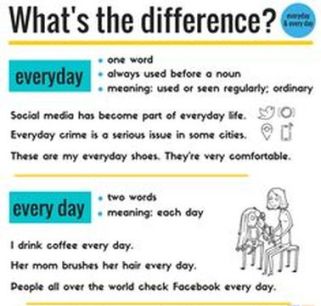
The word everyday is a particularly instructive case. Many writers habitually use it to mean “each day” in sentences like this: “She tends to her garden everyday.” That’s wrong usage, of course, for “everyday” is an adjective that means “encountered or used routinely,” as in “Our prim lady professor shocked us when came to class in everyday dress.” So the correct word choice in the sentence in question is the two-word variant every day: “She tends to her garden every day.” Here, it literally means “each day without fail.” As computer-savvy people might say, “every day” is wysiwyg, which is computer-speak for “what you see is what you get.”


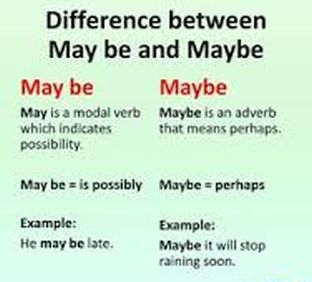
Another recurrently misused tandem is “maybe”/“may be,” which not a few writers often use interchangeably. But the single-word form “maybe” is, as we know, an adverb that means “perhaps,” as in “Maybe sabotage is what caused that plane crash.” On the other hand, the two-word “may be” is a verb form indicating possibility or probability, as in “You may be right about that woman after all.” We don’t say, “You maybe right about that woman after all.”

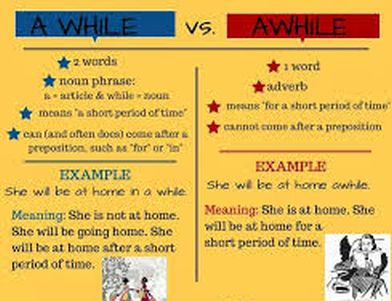
I strongly advise writers to likewise clearly differentiate between “awhile” and “a while.” The single-word “awhile” is an adverb that means “for a time”—a short period reckoned from a particular action or condition—as in “Dinner’s almost ready; please wait awhile.” On the other hand, the noun “while” preceded by the article “a” serves as the object of the preposition in expressions like these two: “It’s raining hard; stay for a while.” “We thought for a while that she could be trusted.” But take note that when we knock off the preposition “for” in such expressions, changing “a while” to “awhile” becomes a correct, natural option: “It’s raining hard; stay awhile.” “We thought awhile that she could be trusted.”


In the same vein, I must caution writers from giving their prose the wrong drift by using the two-word all together in such sentences as “The committee’s assessment of the situation was all together inaccurate.” It delivers an incorrect meaning for that statement because “all together” means “everyone in a group” or “all in one place.” The correct word is the adverb altogether, which means “wholly, “completely,” or “as a whole”: “The committee’s assessment of the situation was altogether inaccurate.”   

Some of the manuscripts I copyedit also misuse the “anyway”/“any way” tandem every now and then. We know that the one-word variant “anyway” means “in any case” or “anyhow,” and its two-word counterpart “any way” means “any particular manner, course, or direction.” So it’s incorrect to write, “We told her to avoid seeing that man, but she continued to date him any way”; instead, it should be, “We told her to avoid seeing that man, but she continued to date him anyway.” Conversely, it’s incorrect to write, “Do it anyway you like; after all, you’re the one paying for it”; instead, it should be, “Do it any way you like; after all, you’re the one paying for it.” 

And just in case you are among those who still have trouble mistaking everything for every thing, let’s clarify the difference between them once and for all. The single-word “everything” means “all that there is” or “all that is important,” as in this sentence: “She took care of everything for me—from my speaking engagements to my travel bookings.” The two-word variant “every thing,” however, means “each thing individually” and usually allows an adjective in-between: “Every little thing means a lot to her.” (Manila Times, Saturday, August 30, 2008)


Watch for the last three Silent Fire retrospectives on Sunday, October 20, 2024!
89
PLAYLIST UPDATE FOR OCTOBER 5 - 11, 2024 OF JOSE CARILLO ENGLISH FORUM’S FACEBOOK GATEWAY

Simply click the web links to the 15 featured English grammar refreshers and general interest stories this week along with selected postings published in the Forum in previous years:

1. Getting to Know English Better: “Using reference word strategies to avoid too much word repetition”


IMAGE CREDIT: PINTEREST.COM
                                    SOME REFERENCE WORD STRATEGIES TO REDUCE
                                      TOO MUCH WORD REPETITION IN OUR SENTENCES


2. You Asked Me This Question: “Precisely how do the English demonstrative pronouns work?”


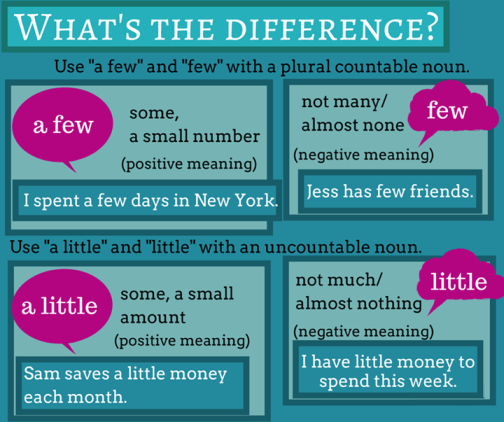
3. Use and Misuse: “Those troublesome modifiers of countable or uncountable nouns!”


4. My Media English Watch Retrospective: “Highly politicized physics and grammatically faulty news reporting”


5. Getting to Know English: “The little-heralded past imperfect tense in English”


6. Essays by Jose A. Carillo: “A potent tool for whittling down complex sentences into simpler ones”


7. Students’ Sounding Board Retrospective: “An assortment of bewildering questions about English usage


8. Your Thoughts Exactly: “The Theater of Life," personal essay by Forum Member Melvin (pseud.)


9. Language Humor at its Finest: “Gems of the fine but now vanishing art of persiflage”


10. Readings in Language: “A recovered ancient manuscript changes the course of human thought”


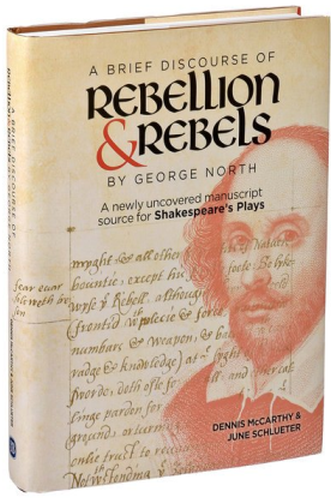
11. Readings in Language: “Self-taught scholar-researcher uncovers “inspiration” for 11 Shakespeare plays”  


12. Time Out From English Grammar: “Geniuses are clear proof that people are not created equal,” American historian on the evolution of the concept of genius from antiquity to the present day


13. Education and Teaching: “ASEAN TeachingEnglish Online Conference now underway till October 30 to challenge traditional teaching paradigms”


14. The Forum Lounge: “What Peter Dinklage walked away from to become a resounding success” (YouTube video)


15. The Forum Lounge  Retrospective: “Lost in the English translation--The Tagalog word Nakakagigil!


90
Getting to Know English / Using reference word strategies to avoid repetition
« Last post by Joe Carillo on October 09, 2024, 08:36:05 AM »
Most of us hate the icky feeling of seeing or hearing the same word over and over again in the same statement, as in this case: “This cellular phone comes in three colors. The first of the colors is gray, the second of the colors is beige, and the third of the colors is blue.” Writers or speakers who come up with such constructions wrongly assume that by repeating the phrase “of the colors” three times in a row to reinforce the phrase “in three colors” in the first sentence, they are making themselves crystal clear. On the contrary, they just make themselves boringly repetitive instead.

A good way to avoid this construction bind is to use the reference word strategy. This is the active effort of preventing the needless recurrence of certain words or phrases in our prose by methodically using more concise words or phrases in their place. These replacements, called reference words, are not the kind we usually hunt for in dictionaries or thesauruses. Reference words are those that we can figure out logically from the relationships of the phrases in the sentence itself, or those that we can readily deduce from their contexts.


   IMAGE CREDIT: PINTEREST.COM
SOME REFERENCE WORD STRATEGIES TO REDUCE
TOO MUCH WORD REPETITION IN OUR SENTENCES

One of these reference word strategies is the noun omission technique, which  avoids the recurrent use of a noun by using the following words in its place: (1) “one,” “another,” and “the other” for three singular count nouns in consecutive order; and (2) the nouns “some,” “others,” and “the others” (or “the rest”) in place of the plural count adjectives “some,” “other,” and “the others” that we normally use right before plural count nouns to modify them. After the noun omission process, however, we must keep in mind that these words become pronouns and cease to work as adjectives.

Of course, the technique of using “one,” “another,” and “the other” in place of three singular count nouns in consecutive order should already be second nature to us. Thus, we know that the repetitive statement at the beginning of this column can take this more concise, more forceful form: “This cellular phone comes in three colors. One is gray, another is beige, and the other is blue.” We should also be very familiar with the technique of organizing our sentences when only two singular count nouns in consecutive order are involved. All we have to do is use “one” and “the other” in tandem: “This cellular phone comes in two colors. One is gray; the other is blue.”

While we are at it, we might as well answer this question: What happens if there are more than three singular count nouns in consecutive order—say, if there are four or six of them? As most of us already know, we simply use the already familiar numerical order technique: “This cellular phone comes in four colors. The first is gray, the second is beige, the third is blue, and the fourth [or last] is green.” Or we can use a serial numbering sequence: “This cellular phone comes in six colors. Color number 1 is gray, 2 is beige, 3 is blue, 4 is green, 5 is pink, and 6 is maroon.” It’s really all that simple.

Things are only a little bit different when we deal with three or more plural count nouns in consecutive order. For instance, if we didn’t use noun omission as a reference word strategy, we might come up with a longwinded sentence like this: “Some of the presidential aspirants are credible, other presidential aspirants are obviously unqualified, and other presidential aspirants are simply nuisance candidates.” Using the noun omission technique, we can boil down the sentence to this more concise and more elegant form: “Some of the presidential aspirants are credible, others are obviously unqualified, and the rest are simply nuisance candidates.”

We can also use elliptical construction to make the sentence even more concise, this time by eliminating the repetitive verb “are” after the first noun clause: “Some of the presidential aspirants are credible, others obviously unqualified, and the rest simply nuisance candidates.” In a sense, noun omission as reference word strategy is another form of elliptical sentence construction, which, we will remember, is the grammar technique of eliminating certain obvious elements in a sentence in a way that doesn’t distort its meaning.

Some caveats when using noun omission for three or more plural count nouns in consecutive order: (1) Never use the word “another” instead of “other” before a plural count noun; thus, this sentence is grammatically wrong: “Some of the presidential aspirants are credible, another presidential aspirants are obviously unqualified.” (The correct way: “Some of the presidential aspirants are credible; other presidential aspirants are obviously unqualified.”); (2) The phrases “the rest” and “the rest of the” are inviolate; they cannot be shortened to “rest” or “rest of them”; thus, this sentence is unacceptable: “Some of the presidential aspirants are credible, others are obviously unqualified, and rest are simply nuisance candidates.” (The correct way: “Some of the presidential aspirants are credible, other presidential aspirants are obviously unqualified, and the rest are simply nuisance candidates.”).

This essay, which first appeared in my weekly column “English Plain and Simple” in The Manila Times, subsequently became Chapter 54 of my book Giving Your English the Winning Edge, ©2009 by the Manila Times Publishing Corp. All rights reserved.

Read this essay and listen to its voice recording in The Manila Times:
Using reference word strategies to avoid repetition

Next week: Using repeated action and sequence words      (October 17, 2024)

Visit Jose Carillo’s English Forum, http://josecarilloforum.com. You can follow me on Facebook and X (Twitter) and e-mail me at j8carillo@yahoo.com.
Pages: 1 ... 7 8 [9] 10