Recent Posts

Pages: 1 ... 6 7 [8] 9 10
71
Getting to Know English / Using relative pronouns as reference words
« Last post by Joe Carillo on November 13, 2024, 06:27:02 PM »
We have already reviewed four reference word strategies, or the use of specific grammatical devices that allow us to clarify and enliven our spoken or written prose and to avoid unnecessarily repeating ourselves. Those strategies are the use of demonstrative reference words, the use of broader meaning and summary words, and the use of synonyms and related words. This time we will take up one last strategy: the use of relative pronouns to allow us to provide additional information about the nouns preceding them in the sentence. Relative pronouns, you will recall, serve to link dependent clauses or phrases to their antecedent nouns, doing so as intermediate subjects or objects of those dependent clauses.

It may come as a surprise, but we have already encountered most of those relative pronouns—“which,” “who,” “that,” and “whose” and the compounds “whoever,” “whomever,” and “whichever”—in their more usual roles as subordinating conjunctions. Recall that they are better known as the subordinators, those word-markers that announce and link subordinate clauses or phrases to the main—and independent—clauses, resulting in complex sentences.


Relative pronouns as subjects of the dependent clause. Take a look at this use of the relative pronoun “which”: “Voters have to decide which of the candidates can serve the national interest best.” Here, “which” works as a subordinate conjunction, serving as the subject of the dependent clause “which of the candidates can serve the national interest best” and as the object of the verb “decide” in the main clause “voters have to decide.” It’s as simple as that.

Now, in case some of you are already bristling at the idea of using “which” in reference to the word “candidates” that happens to be a personal noun, we can easily recast the sentence using “who” as reference word: “Voters have to decide who among the candidates can serve the national interest best.” This time, it’s the reference word “who” that serves as the subject of the dependent clause and as the object of the verb “decide” in the independent clause. We can be confident now that when “which” and “who” are used as subjects of a dependent clause, that hoary rule that limits them to inanimate nouns and personal nouns, respectively, doesn’t necessarily apply; the more important thing is how they are used in the sentence.

Relative pronouns as objects of the dependent clause. Now let’s see how the relative pronoun “that” works as the object of the dependent clause. Take a look at this sentence: “The speaker that we invited to the seminar is a well-regarded civic leader.” (In informal usage, we can omit “that” in constructions like this, so that sentence will read as follows: “The speaker we invited to the seminar is a well-regarded civic leader.”) Here, the relative pronoun “that” relates back to the noun “speaker”; it’s also the object of the verb “invited.” Note that the dependent clause “that we invited to the seminar” makes a welcome qualifying intrusion into the independent clause, “The speaker […] is a well-regarded civic leader.”

An important thing to remember is that the subordinators “that” and “who” are our only choices as relative pronoun when the dependent clause is essential information to the independent clause. When the dependent clause can be taken out without altering the meaning of the independent clause, then we should use the subordinator “which” in the case of inanimate things, but this time we should set the subordinate clause apart from the independent clause with two commas: “That historic decision, which I have every reason to believe was made under duress, changed the course of history.” The relative pronoun “who,” of course, can be used whether the dependent clause is essential or not: “The spy who loved me came in from the cold.” “This traitorous spy, who made a mockery of all our security measures, must suffer for his perfidy.”

Relative pronouns as reference markers for possession. The relative pronoun “whose,” as all of us already know, serves as a reference marker for defining relative clauses that denote possession or ownership: “That’s the woman whose husband was arrested in the drug bust last night.” “Never completely trust a man whose trustworthiness has not been demonstrated.” Defining clauses like “whose husband was arrested in the drug bust last night” and “whose trustworthiness has not been demonstrated” are always essential to the independent clause and should never be set apart with commas.

Relative pronouns referring to the subject of a clause or to the object of a verb. When the subject of a clause or sentence is a person or group of people, we can use the relative pronouns “whom” and “whomever” in relating defining relative clauses with them: “The presidential candidate will choose whom [whomever] he likes to be part of his senatorial slate.” Here, “whom” or “whomever” is the direct object of the verb “chooses.” On the other hand, when the subject of a clause or sentence is an inanimate thing, we use the relative pronoun “whichever” instead to make the link: “I will accept whichever proposal will benefit our group best.

This essay, which first appeared in my weekly column “English Plain and Simple” in The Manila Times, subsequently became Chapter 59 of my book Giving Your English the Winning Edge, ©2009 by the Manila Times Publishing Corp. All rights reserved.

Read this essay and listen to its voice recording in The Manila Times:
Using relative pronouns as reference words

Next week: The usefulness of resumptive modifiers     (November 21, 2024)

Visit Jose Carillo’s English Forum, http://josecarilloforum.com. You can follow me on Facebook and X (Twitter) and e-mail me at j8carillo@yahoo.com.

72
Philippine SSS urges members to update their contact information; implements SMS-OTP in the My.SSS Portal

The Social Security System (SSS) today called on its members to immediately update their contact information, especially their mobile numbers, as the state-run pension fund implemented Multi-Factor Authentication schemes during logins to the My.SSS Portal.

SSS Officer-in-Charge Voltaire P. Agas said that SSS took this proactive step by incorporating an authentication process whenever its members log in to their My.SSS account. “It will enhance the security of the SSS online portal,” he explained.
 
Agas said the passcode will be sent to the member’s registered mobile numbers in the SSS records whenever they access their My.SSS accounts. He added that outdated or inactive contact information can be a hurdle when logging into the portal.


"Updating your contact info ensures you get the codes to verify your identity when you sign in to your online account. Hence, we are urging our members to update their contact information,” Agas added.
 
Updating via online or branch offices

Agas, who is also the SSS Executive Vice President for the Branch Operations Sector, said that members can update their contact information online or at any SSS branch office.
 
"If you have an existing mobile number in the SSS database but no longer use that phone number, you can update your details online through your My.SSS account," he explained.

He said that members without a mobile number in the SSS records can update their contact information by submitting a Member Data Change Request form to any SSS branch office nationwide.
 
Members who struggle with the My.SSS Portal should visit the e-centers in the SSS branch offices. “We have established e-centers manned by SSS personnel who are ready to assist and guide you in using the My.SSS Portal,” Agas added.
 
Authentication options

Maria Belinda S. San Jose, the SSS Senior Vice President for Information Technology Management, said that SSS members have two options for multi-factor authentication to access their My.SSS account. These are the SMS One-Time Password (SMS-OTP) and the Time-based One-Time Password (TOTP).
 
San Jose said that by default, members can use the SMS-OTP to log in to their accounts. A six-digit passcode will be sent to their SSS-registered mobile every time they log in. It will be used to verify their identity in the My.SSS Portal. Thus, this calls for immediate updating of their contact numbers.
 
"Members can use TOTP as their preferred authentication method. They must enter the verification code to the Google Authenticator app to access their My.SSS account," Belinda explained.
 
She added that implementation of these two authentication options for the My.SSS Portal bolsters the security feature of the online portal, mitigating the risks associated with unauthorized access and potential fraud.
73
The American philosopher Alva Noë, a University of California-Berkeley professor where he is also the philosophy department chair, says in an essay he wrote for Aeon.co that computers don’t actually do anything--"[t]hey don’t write, or play; they don’t even compute...[w]hich doesn’t mean we can’t play with computers, or use them to invent, or make, or problem-solve--but "[t]he new AI is unexpectedly reshaping ways of working and making, in the arts and sciences, in industry, and in warfare." For this reason, he argues, it is important for us humans "to come to terms with the transformative promise and dangers of this new tech...without succumbing to bogus claims about machine minds."

He then asks with trepidation: "What could ever lead us to take seriously the thought that these devices of our own invention might actually understand, and think, and feel, or that, if not now, then later, they might one day come to open their artificial eyes thus finally to behold a shiny world of their very own? One source might simply be the sense that, now unleashed, AI is beyond our control. Fast, microscopic, distributed and astronomically complex, it is hard to understand this tech, and it is tempting to imagine that it has power over us."

                                    IMAGE CREDIT: AEON.COM

Professor Noë then focuses with great apprehension on "the tendency of some scientists to take for granted what can only be described as a wildly simplistic picture of human and animal cognitive life. They rely unchecked on one-sided, indeed, milquetoast conceptions of human activity, skill and cognitive accomplishment." He then urges the reader to look back to Alan Turing and the very origins of AI--about which Turing dismissed the question "Can machines think?" as "too meaningless to deserve discussion."

Indeed, Professor Noë says that "instead of trying to make a machine that can think, Turing was content to design one that might count as a reasonable substitute for a thinker. Everywhere in Turing’s work, the focus is on imitation, replacement and substitution."

In the same anti-philosophical spirit, Turing proposed that we replace the meaningless question "Can machines think?" with the empirically decidable question "Can machines pass [what has come to be known as] the Turing test? To understand this proposal, we need to look at the test, which Turing called the Imitation Game."

Professor Noë then devotes the rest of his 3,000-word essay to the various ramifications and dangers of Turing's envisioned scenario in which machines might be able to enter into and participate in meaningful human exchange: "Would their ability to do this establish that they can think, or feel, that they have minds as we have minds?"
     
Read in full Professor Alan Noë's wide-ranging cautionary thoughts about AI in "Rage against the machine" in the Aeon.co website now!

Alva Noë is an American philosopher. He is professor at the University of California-Berkeley where he chairs the philosphy department The focus of his work is the theory of perception and consciousness. His books include Strange Tools: Art and Human Nature (2015) and The Entanglement: How Art and Philosophy Make Us What We Are (2023).
74
A recent BBC news story by Hannah Ritchie reports that a new peer-reviewed study by two Sydney-based marhematician-researchers has called into question the "infinite monkey theorem", an old adage claiming that given an infinite amount of time, a monkey pressing keys on a typewriter would eventually be write the complete works of William Shakespeare.

The study led by Sydney-based mathematicians Stephen Woodcock and Jay Falletta has determined that the time it would take for a typing monkey to replicate Shakespeare's plays, sonnets and poems "would be longer than the lifespan of our universe."


                                                           IMAGE CREDIT: GETTY IMAGES

Even if every chimp in the world was enlisted and able to type at a pace of one key per second until the end of the universe, they wouldn't even come close to typing out the Bard's works, they concluded.

Their conclusion was that there would be only a 5% chance that a single chimp of the estimated global population of 200,000 chimps would be able tosuccessfully type just the word "bananas" in its own lifetime, and just one chimp constructing a random sentence such as "I chimp, therefore I am" has a probability of only 1 in 10 million billion billion.

Read the Hannah Ritchie's report "Monkeys will never [be able to] type Shakespeare, study finds" in BBC News now!
75
PLAYLIST UPDATE FOR NOVEMBER 2 - 8, 2024 OF JOSE CARILLO ENGLISH FORUM’S FACEBOOK GATEWAY

Simply click the web links to the 15 featured English grammar refreshers and general interest stories this week along with selected postings published in the Forum in previous years:

1. Getting To Know English Better: “Using synonyms to enliven prose”


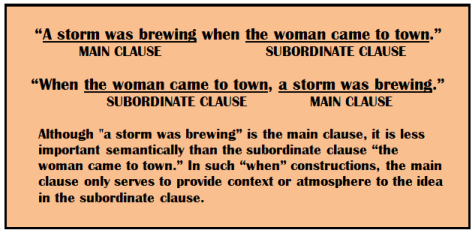
2. Going Deeper Into Language: “Subordinate clauses don't always play second fiddle to main clauses”


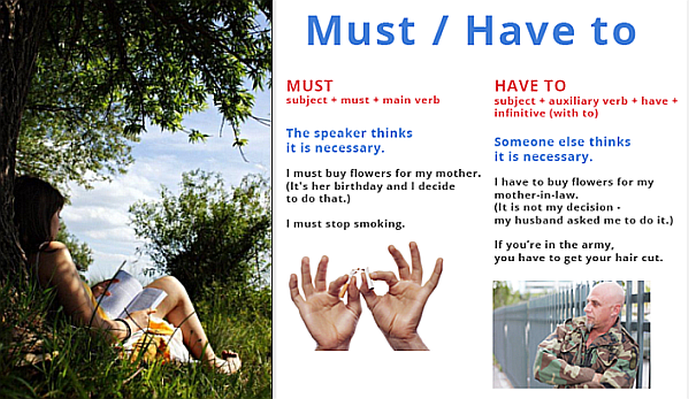
3. Students’ Sounding Board: “Does 'have to' mean the same thing as the modal auxiliary verb 'must'?”


4. Advice and Dissent: “Teaching our children to think logically”


5. Essays by Jose A. Carillo: “Avoiding the embarrassing pitfall of misusing certain English words”


6. Getting To Know English: “How inversion can clarify baffling sentences”


7. Your Thoughts Exactly: “Mind Matters!”, a personal essay by Forum Member Melvin (pseudonym)


8. Advice and Dissent: “For all the promise and dangers of AI, computers plainly can’t think, argues  American philosopher Alva Noë”


IMAGE CREDIT: AEON.COM


9. Language Humor At Its Finest: “Five dozen amusing job descriptions”


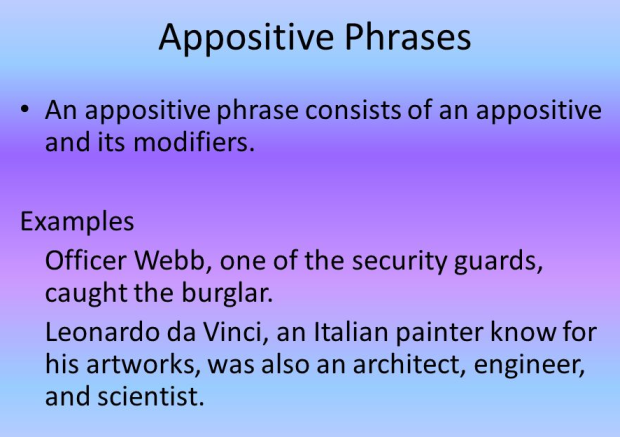
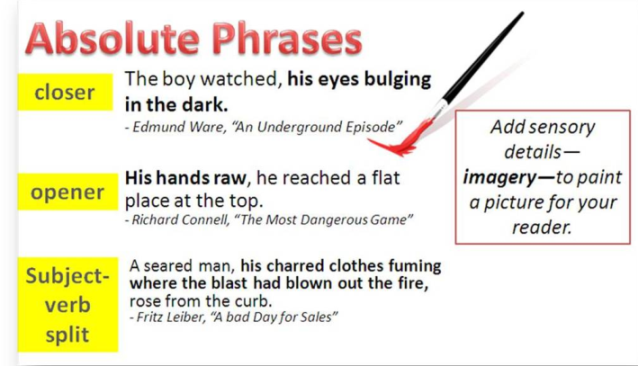
10. You Asked Me This Question: “Absolute phrases don’t function in the same way as appositives”


11. Education and Teaching: “The language of literature and science,” personal reminiscence by Jose A. Carillo


12. Readings in Language: “Monkeys won't be able to type Shakespeare's works within our universe's lifespan, says two Sydney-based mathematicians”


                                                                  IMAGE CREDIT: GETTY IMAGES


13. Time Out From English Grammar: “Three eye-opening science readings to fight irrationality”


14. Students’ Sounding Board Retrospective: Which is correct and why? “I didn’t (see, saw) her”  


15. The Forum Lounge: “Phenomenal rock star Freddie Mercury sings 'Barcelona' for the ages


76
Getting to Know English / Using synonyms to enliven prose
« Last post by Joe Carillo on November 05, 2024, 08:06:30 AM »
The French novelist Gustave Flaubert believed that only one word could give justice to a particular thing—“le mot juste” —and he obsessively searched for it before committing himself on paper. He may well have been right. After all, short of deliberately destroying the thing itself, there really isn’t much we can do to change its fundamental nature. Thus, in the English language, an “apple” will remain an “apple” till it’s eaten and digested, and “Eve” will remain “Eve” even after she has eaten that apple and is cast away from Paradise. Fortunately for us, however, there’s really no semantic law forbidding us to call an “apple” or “Eve” by some other word the next time it figures in our thoughts or on our tongues.
 
                                                     
                                                                          IMAGE CREDIT: RAWPIXEL.COM   

How dreary language, communication, and literature would be, in fact, if Flaubert’s prescription for words—like what is generally believed as the preferred French prescription for kissing—were to be followed to the letter! Then we would have to contend every time with the tedium of going through passages like this:

“The apple is the popular edible fruit of the apple tree. The apple has the scientific name Malus sylvestris and belongs to the family Rosaceae. The apple is widely cultivated in temperate climates. The apple has more than 7,000 varieties but only 40 are commercially important, and the most popular apple variety in the U.S. is called ‘Delicious.’ Apples are of three main types: cooking apples, dessert apples, and apples for making cider.”

Using synonyms or similar words in place of a particular key word is actually one of the most powerful devices for giving zest and substance to language. Along with the other reference word techniques that we have already learned, they help ensure that our listeners or readers won’t tune us out because of boredom. Synonyms, while not exactly le mot juste, allow us to clarify meaning by focusing on the word’s specific attributes, thus throwing new light on the same idea. They make laborious, complicated explanations unnecessary; as in painting, well-chosen single words or short phrases are quick brush strokes that illumine ideas or clarify meaning and intent. As Peter Mark Roget, author of Roget’s Thesaurus, remarked in his introduction to the revolutionary book in 1852: “Some felicitous expression thus introduced will frequently open the mind of the reader to a whole vista of collateral ideas.”

Indeed, see what happens to the dreary apple passage above when we take Roget’s prescription to heart:

“The apple, the mythical fruit often associated with the beginnings of the world and mankind, is the popular fruit of the tree of the same name. The fleshy, edible pome—usually of red, yellow, or green color—has the scientific name Malus sylvestris and belongs to the family Rosaceae. As a cousin of the garden rose, it has the same usually prickly shrub with feather-shaped leaves and five-petaled flowers. It is widely cultivated as a fruit crop in temperate climates. More than 7,000 varieties of the species are known but only 40 are commercially important, and its most popular variety in the U.S. is called ‘Delicious.’ The fruit is of three main types: the cooking apple, the dessert apple, and the type for making cider.”

This revised passage uses a total of eight apple synonyms and similar words: “popular fruit,” “tree of the same name,” “pome,” “a cousin of the garden rose,” “a fruit crop,” “species,” “variety,” and “the type”—each one capturing a new shade of meaning, aspect, connotation, or denotation of the apple and throwing the idea of the word “apple” in bolder relief.

We must beware, though, that synonyms can only establish contexts, not definitions; they may help illuminate discourse but not offer an analysis of things. For instance, in the revised apple passage, the synonyms used will be useful only to the extent that each of them is already understood by the listeners or readers. All of the apple-related words used—except “pome”—work very well as synonyms in the passage because they are of common knowledge; depending on the target audience, however, “pome” may need some clarifying amplification. (A pome, for those confounded by the word, is “a fleshy fruit with an outer thickened fleshy layer and a central core with usually five seeds enclosed in a capsule.”) The speaker or writer must ultimately decide if such amplification is needed.

When using synonyms, we also must make sure that their antecedent words—whether nouns, pronouns, or verbs—are clear all throughout. There is always the danger of overdoing the word replacements, particularly when the conceptual link between the original sword and the synonym is not strong enough. In that case, repeating the original word or using the obvious pronoun for it—“he,” “she,” “it,” “they,” or “them”—may be more advisable. Go over the revised apple passage again and see how the pronoun “it” for apple was used twice to provide such a link and continuity.

This essay, which first appeared in my weekly column “English Plain and Simple” in The Manila Times, subsequently became Chapter 58 of my book Giving Your English the Winning Edge, ©2009 by the Manila Times Publishing Corp. All rights reserved.

Read this essay and listen to its voice recording in The Manila Times:
Using synonyms to enliven prose

Next week: Using relative pronouns as reference words        (November 14, 2024)

Visit Jose Carillo’s English Forum, http://josecarilloforum.com. You can follow me on Facebook and X (Twitter) and e-mail me at j8carillo@yahoo.com.
77
Getting to Know English / Using demonstrative reference words
« Last post by Joe Carillo on October 30, 2024, 09:42:48 AM »
This time, our back-to-the-basics review of English composition brings us to the demonstrative reference words—those handy words we use so we don’t have to repeat ourselves to drive home a point and, even more important, to make what we are saying more immediate and forceful. As some of you may recall, the three categories of these reference words are the demonstrative adjectives, the demonstrative pronouns, and the demonstrative adverbs.


Demonstrative adjectives. This category consists of the modifiers “this,” “that,” “these,” and “those.” These words belong to the class of function words called determiners, which serve to either identify nouns or word groups functioning as nouns or give additional information about them (the non-demonstrative determiners “a,” “an,” and “the” also belong to this class). We will remember that the demonstrative adjectives always agree in number with the nouns they modify—“this” and “that” for singular nouns, as in “this apple” and “that woman,” and “these” and “those” for plural nouns, as in “those apples” and “those women.”

The demonstrative adjectives “this,” “that,” “these,” and “those” are also called the pointing words. See the big difference these pointing words make: “That car salesman over there is recommending this model to me instead of that model over there, but I think all of these models offered by this dealer are priced much higher than those offered by the other dealer downtown.”

Look at the statement now without the demonstrative adjectives: “The car salesman is recommending one model to me instead of another model, but I think all the models offered by the dealer are priced much higher than the models offered by the other dealer downtown.” The sense of identity, immediacy, and proximity evoked by the first sentence is gone, clear proof that the judicious use of demonstrative adjectives truly gives verve and specifity to language.

The demonstrative adjectives work as well even if the speaker or writer isn’t actually present at the place where the objects being described are found. When adroitly used in narratives or expository writing, these pointing words can actually allow the reader to relive the writer’s experience, as if the reader himself was present at the scene.

Take this narrative passage:

There was this lovely woman beside me at the bus stop during this pounding rain, and right in front of us were these three men who looked like thugs, eying us with a menace that you could actually feel. Those moments made me think that it was the better part of valor to flee—never mind what could happen to that woman beside me—but these two thoughts stopped me from taking that action: ‘What will happen to this woman if I left her behind?’ ‘Will I ever get over this shameful act of cowardice that I am about to do now?’

Demonstrative pronouns. When the reference words “this,” “that,” “these,” and “those” point to specific things independently without latching on to specific nouns, they function as demonstrative pronouns instead. This is the case with the pointing words in the following sentences: “This is the variety of apples I mentioned to you last night.” “That is the director that launched a thousand acting careers.” “I don’t like these any more than you do.” “Those are a few of my favorite things.”

We can clearly see that demonstrative pronouns are particularly suited to spoken prose, when the speaker can actually point to the objects he or she is describing, whether near or far from where he or she speaks. In writing, however, we can’t point as easily to a particular object or noun, so we need a clear antecedent noun to establish the identity of the object that the demonstrative pronoun has replaced: “The man’s eldest son passed the entrance test to the state university. That made him easily the happiest father in the small farming town.”

When such a link to an antecedent noun can’t be clearly established from the preceding sentences, it becomes advisable to supply a new noun. This is where the demonstrative adjectives come in handy; they modify the new or repeated nouns instead of replacing them: “That feat of his son made him easily the happiest father in the small farming town.”

Demonstrative adverbs. This class of reference words includes such adverbs as “here,” “there,” “then,” “thus,” and “hence.” These words can handily take on the role of those places or situations that the listener or reader already knows, or those earlier described in a narrative and other forms of expository prose, thus avoiding the need to present them again: “As I told you before, I want you here, not there. You were a free agent then, but not anymore. You will thus be reporting to me directly until six months hence, when your contract expires.”

This essay, which first appeared in my weekly column “English Plain and Simple” in The Manila Times, subsequently became Chapter 56 of my book Giving Your English the Winning Edge, ©2009 by the Manila Times Publishing Corp. All rights reserved.

Read this essay and listen to its voice recording in The Manila Times:
Using demonstrative reference words

Next week: Using synonyms to enliven prose        (October 31, 2024)

Visit Jose Carillo’s English Forum, http://josecarilloforum.com. You can follow me on Facebook and X (Twitter) and e-mail me at j8carillo@yahoo.com.

78
PLAYLIST UPDATE FOR OCTOBER 26 - NOVEMBER 1, 2024 OF JOSE CARILLO ENGLISH FORUM’S FACEBOOK GATEWAY

Simply click the web links to the 15 featured English grammar refreshers and general interest stories this week along with selected postings published in the Forum in previous years:

1. Getting To Know English Better: “Using demonstrative reference words”


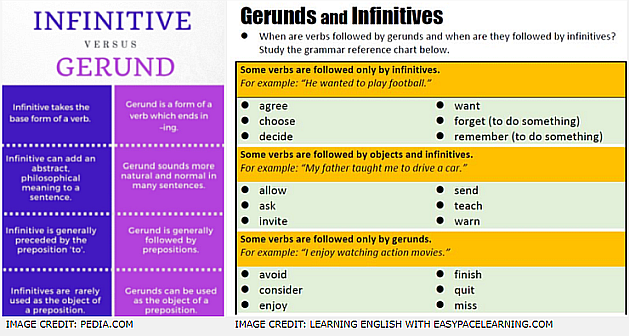
2. You Asked Me This Question: “Play it by ear whether to use an infinitive or gerund”


3. Students’ Sounding Board: “Did our national hero Jose Rizal ever speak and write in English?"


4. My Media English Watch Retrospective:  “A case of grammar déjà vu (that's French, of course, for ‘a feeling that one has seen or heard something like it before‘)”


5. Getting To Really Know English: “The six basic logical relationships in English”


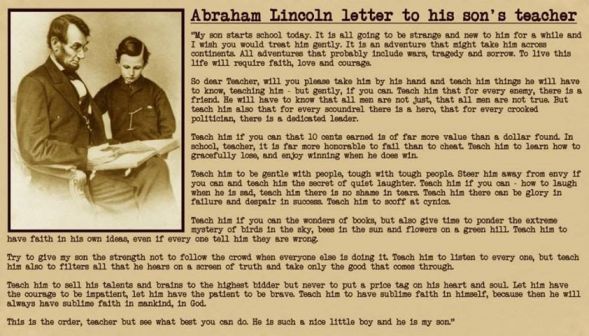
6. Essay by Jose A. Carillo: “A father's letter to his son's teacher”--it sounded too well-written I couldn't resist checking it out


7. Time Out From English Grammar: “Two poetry readings for All Saints' Day and All Souls' Day


8. Time Out From Grammar Retrospective: “Is it true that we're just an impurity in an otherwise beautiful universe?”


 9. Language Humor At Its Finest: “40 choice paraprosdokians to make sense of our times”


10. Education and Teaching: “The language of literature and science,” personal reminiscence by Jose A. Carillo


11. Readings in Language: “English will most likely be without that gender-neutral pronoun forever,” American linguist and political commentator John McWhorter argues in his 2014 article for The New Republic


IMAGE CREDIT: BEN AVNY        FOR NEWREPUBLIC.COM


12. Time Out From English Grammar: “European female frogs play dead to avoid unwanted sexual advances”


13. The Forum Lounge: “The century-old seasoning known as MSG is getting destigmatized”  


14. You Asked Me This Question Retrospective: “Should the law and lawyers casually say ‘plea of guilty’ and ‘plea of innocent’?”


15. The Forum Lounge: “33 golden nuggets of inspiration” by the late U.S. radio-TV writer Andy Rooney as shared with us in 2011 by Forum Member Justine Aragones and illustrated by the Forum inthe Philippine local context


79
October 27, 2024

Dear Forum Reader and Friend,


During the past 21 years, my column “English and Simple” in The Manila Times and its eventual companion web platform Jose Carillo’s English Forum (starting 2009) have provided readers and Forum members with a continuing stream of critiques of the quality of the English in the news reportage, opinions and commentaries, as well as commercial advertising carried by the mass media and social media entities that we are monitoring. Our primary objective in these efforts is to help Filipinos in their homeland and overseas improve their proficiency in English through a much better understanding of its grammar, semantics, standard usage, and language peculiarities.


In this our latest Forum retrospective, we are presenting the Forum’s critiques of the 10 most notable instances through the years when the news stories and commentaries under review terribly showed bad sense and awful English grammar. Do take time to read them and see for yourself why we had not been as lenient and forgiving in our appraisal of their faulty English usage: 

1. “It’s obtuse, even distasteful, to say that seeing a doctor is ‘pleasurable’” (April 13, 2018)

2. “The perils of misusing literary allusions in feature stories” (May 29, 2011) 

3. “Shock-and-awe English in 2013 Bohol earthquake reportage” (October 18, 2013)   

4. “Open letter on news stories that Filipinas have the world’s smallest breasts” (July 15, 2016)   

5. “When immodest medical jargon is used as a slogan” (April 10, 2005)

6. “The madcap names of the party-list groups” (May 8, 2010)

7. “Retrospective on the importance of grammar-perfect English” (April 20, 2024)       

8. “The state of our English” (May 22, 2009)   

9. “Do kingfishers eat butter?” (2004)   

10. “A crash course in politically correct English” (July 26, 2014)   
     
With my best wishes,
Joe Carillo


Att.: As stated
80
During the past 21 years, my column “English and Simple” in The Manila Times and its eventual companion web platform Jose Carillo's English Forum (starting 2009) have provided its readers with a continuing stream of routine critiques of the quality of English in the news reportage, opinions and commentary, as well as commercial advertising purveyed by the mass and social media. Our primary objective in these efforts is to help Filipinos improve their proficiency in English through a better understanding of its grammar, semantics, standard usage, and language peculiarities. This, of course, can clearly be discerned from my column series and the thousands of English-usage postings in the Forum to date.


In this latest retrospective series, however, we are taking the opportunity to present the Forum's critiques of the 10 most notable instances when the news stories and commentaries under review terribly assaulted us with their bad sense and awful English grammar. Read them and see for yourself why we had not been as lenient and forgiving in our critiques of their English usage.

As originally posted in the Forum, these 10 exceptionally harsh critiques of their bad sense and awful English grammar are as follows:

1. “It’s obtuse, even distasteful, to say that seeing a doctor is ‘pleasurable’” (April 13, 2018)
   
2. “The perils of misusing literary allusions in feature stories” (May 29, 2011) 
   
3. “Shock-and-awe English in 2013 Bohol earthquake reportage” (October 18, 2013)
   
4. “Open letter on news stories that Filipinas have the world’s smallest breasts” (July 15, 2016)
   
5. “When immodest medical jargon is used as a slogan” (April 10, 2005)
     
6. “The madcap names of the party-list groups” (May 8, 2010)
   
7. “The importance of grammar-perfect English” (April 20,2024)
     
8. “The state of our English”  (May 22, 2009)
     
9. “Do kingfishers eat butter?”  (2004)
   
10. “A crash course in politically correct English”  (July 26,2014)   
     
Simply click their respective links to read the Forum's harsh critique of each them.
Pages: 1 ... 6 7 [8] 9 10