Recent Posts

Pages: 1 ... 4 5 [6] 7 8 ... 10
51
PLAYLIST UPDATE FOR DECEMBER 21 - 27, 2024 OF JOSE CARILLO ENGLISH FORUM’S FACEBOOK GATEWAY

Simply click the web links to the 15 featured English grammar refreshers and general interest stories this week along with selected postings published in the Forum in previous years:

1. Getting to Know English: “Three semantic brides all in a row”


2. You Asked Me This Question: “How does the meaning of ‘I'd ask of you’ differ with ‘I'd ask you’?”


3. Readings in Language: “The age-old debate over ‘It’s not you, it’s (me, I)’ flares up again”




4. Advice and Dissent: “Why we find it pleasing to read stories we know to be untrue”


5. Your Thoughts Exactly: “Obasute: A reflection this Christmas,” by Antonio Calipjo Go, Forum Contributor


6. Your Thoughts Exactly: “10 Enduring Remembrances of Christmases Past - Redux 15”



7. A Forum Lounge Retrospective: “A beauty and a love verboten” by Angel B. Casillan, Forum Contributor



8. Time Out From English Grammar: “Advice from a noted scientist to aspiring young scientists”


9. Language Humor at its Finest: “Gems of the fine but now vanishing art of persiflage”


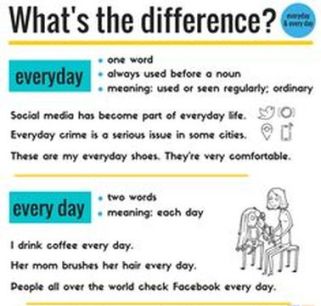
10. Essay by Jose A. Carillo: “One-word, two-word mix-ups”


11. Students’ Sounding Board: “Why is the letter ‘I’ always capitalized?”


12. Advice and Dissent: “Is ‘the algorithm’ really a powerful meta-specter haunting our hauntings?” by Anna Shechtman in the Yale Review


13. The Forum Lounge: “A wheelchair dancer lives up her dream,” a travel recollection by Forum Member Tonybau



14. The Forum Lounge: “Things my mother taught me,” contributed by Forum Member Ben Sanchez


15. The Forum Lounge Retrospective: “Celebrating the Holiday Season with an element of surprise”



52
Getting to Know English / Three semantic brides all in a row
« Last post by Joe Carillo on December 23, 2024, 11:01:56 PM »
To show the semantic power of the three rhetorical devices that we have taken up in our preceding discussions—namely the resumptive modifier, the summative modifier, and the free modifier—it’s tempting to simply mint new specimens of each as examples. That’s actually what we have been doing so far, a process that, of course, is very much like using bridal stand-ins to go through rehearsals for a grand wedding. But this time we’ll see all three of the semantic brides for real, their grooms three of the finest stylists the English language has ever produced: the breathtakingly iconoclastic American journalist H. L. Mencken, the towering English historian Edward Gibbon, and the eminent American naturalist-philosopher Loren Eiseley.

The masterful English prose of H.L. Mencken, Edward Gibbon, and Loren Eiseley draw much of their power from their skillful use of resumptive modifiers and free modifiers and, once having exhausted a theme, from an occasional summative modifier--yielding nonfiction that not only read well but that’s also great literature.
   
Let’s begin by taking a look at Mencken’s artistry in using resumptive, summative, and free modifiers in this vaulting, magnificent prose from In Defense of Women [all underscoring in this and in subsequent passages mine]:

       “Find me an obviously intelligent man, a man free from sentimentality and illusion, a man hard to deceive, a man of the first
        class, and I’ll show you a man with a wide streak    of woman in him. Bonaparte had it; Goethe had it; Schopenhauer had it;
        Bismarck and Lincoln had it; in Shakespeare, if the Freudians are to be believed, it amounted to downright homosexuality. The
        essential traits and qualities of the male, the hallmarks of the unpolluted masculine, are at the same time the hallmarks of the
        Schafskopf [a German word, literally “sheep’s head,” that means a “dolt” or “numskull”]. The caveman is all muscles and mush.
        Without a woman to rule him and think for him, he is a truly lamentable spectacle: a baby with whiskers, a rabbit with the frame
        of an aurochs, a feeble and preposterous caricature of God.”

Notice, first, how Mencken uses “man” as a resumptive modifier, effortlessly elaborating on the word in the four free relative clauses that follow the main clause: “a man free from sentimentality and illusion,” “a man hard to deceive,” “a man of the first class,” and “I’ll show you a man with a wide streak of woman in him.” Then marvel at how Mencken audaciously sums up the paragraph by reinforcing the noun phrase “a truly lamentable spectacle” with free relative modifiers that also superbly work as summative modifiers: “a baby with whiskers,” “a rabbit with the frame of an aurochs,” and “a feeble and preposterous caricature of God.” In this kind of rapier-sharp prose, Mencken—then as now—has few equals.

Contrast Mencken’s deliciously scathing diatribes with Gibbon’s detached yet consummately elegant parallelisms in this passage from The Decline and Fall of the Roman Empire:

        “Yet Julian sustained adversity with firmness, and prosperity with moderation. After an interval of one hundred and twenty
        years from the death of Alexander Severus, the Romans beheld an emperor who made no distinction between his duties and his    
        pleasures, who laboured to relieve the distress and to revive the spirit of his subjects, and who endeavoured always to connect
        authority with merit, and happiness with virtue. Even faction, and religious faction, was constrained to acknowledge the superiority
        of his genius in peace as well as in war, and to confess, with a sigh, that the apostate Julian was a lover of his country, and that he
        deserved the empire of the world.”

In this train of evocative relative clauses, both bound and free, Gibbon makes history spring back to life, vividly and authoritatively.

Now, let’s watch Eiseley eloquently yet quietly conjuring for us the epochal march of life and time in this meditation from The Immense Journey:

        “The world of the giants was a dying world. These fantastic little seeds skipping and hopping and flying about the woods and
         valleys brought with them an amazing adaptability. If our whole lives had not been spent in the midst of it, it would astound
         us. The old, stiff, sky-reaching wooden world had changed into something that glowed here and there with strange colors,
         put out queer, unheard-of fruits and little intricately carved seed cases, and, most important of all, produced concentrated
         foods in a  way that the land had never seen before, or dreamed of back in the fish-eating, leaf-crunching days of the
         dinosaurs.”

Through the masterful use of free and bound relative modifiers, Eiseley shows us eternity in just a little over a hundred words.

The prose of Mencken, Gibbon, and Eiseley shows one outstanding thing in common: an authentic voice that gives vent to a seamless, effortless flow of ideas. And as we can see, their discourses draw much of their power from the skillful use of resumptive modifiers and free modifiers and, once having exhausted a theme, from an occasional summative modifier. As such their prose becomes more than just journalism, more than just history, more than just meditation. They bring us to the realm of deeply felt and felicitously expressed ideas—nonfiction that not only reads well but that’s also great literature.

This essay, which first appeared in my weekly column “English Plain and Simple” in The Manila Times, subsequently became Chapter 64 of my book Giving Your English the Winning Edge, ©2009 by the Manila Times Publishing Corp. All rights reserved.

Read this essay and listen to its voice recording in The Manila Times:
Three semantic brides all in a row

Next week:  In defense of the passive voice   (January 2, 2025)

Visit Jose Carillo’s English Forum, http://josecarilloforum.com. You can follow me on Facebook and X (Twitter) and e-mail me at j8carillo@yahoo.com.
53
PLAYLIST UPDATE FOR DECEMBER 14 - 20, 2024 OF JOSE CARILLO ENGLISH FORUM’S FACEBOOK GATEWAY

Simply click the web links to the 15 featured English grammar refreshers and general interest stories this week along with selected postings published in the Forum in previous years:

1. Getting to Know English: “Making good use of free relative clauses”


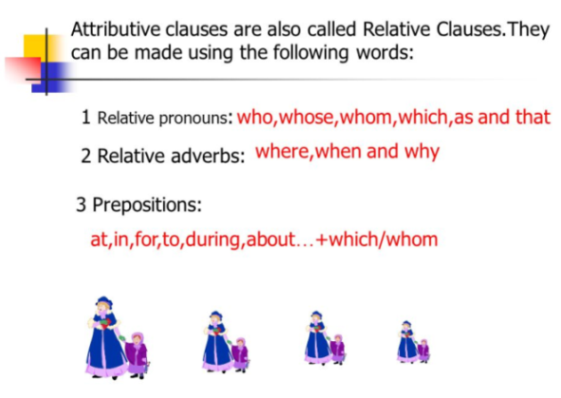
2. Use and Misuse: “What are substantive and attributive clauses?”

SUBSTANTIVE CLAUSES:
 

ATTRIBUTIVE CLAUSES:


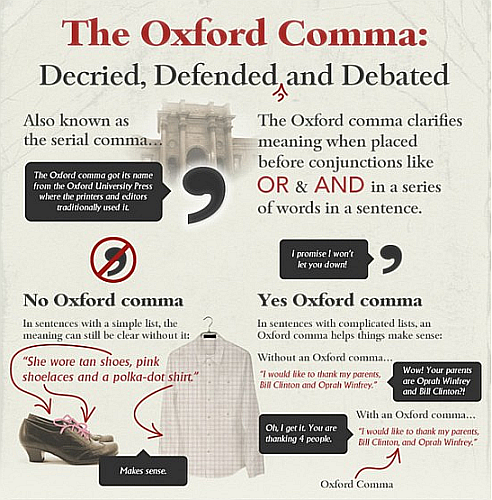
3. Essays by Jose A. Carillo: “Using the serial comma isn't just a matter of stylistic preference”


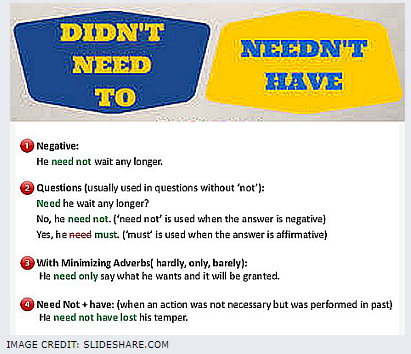
4. You Asked Me This Question: “The strange grammar of 'need' as modal auxiliary”


5. My Media English Watch Retrospective: “Placing a modifier where it rightfully should be”


6. Getting to Know English: “Four peculiar ways to make your English beyond reproach”


7. Advocacies: “Bill Gates advocates environment-friendly subtitutes for animal fat in our diet”


8. Students’ Sounding Board: “When is sentence inversion a matter of grammar or style?”


9. Language Humor At Its Finest: 34 business jokes and quotes to perk up our dreary days


10. Your Thoughts Exactly Retrospective: “Candor of Reality,” personal essay contributed by Neronver-Zac (pseud)


11. Advice and Dissent: “Grammar poll on a contentious subject-verb agreement disagreement”


12. Readings in Language Retrospective: “Descriptivism in English can quickly succumb to its own kind of smugness”


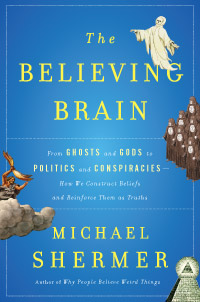
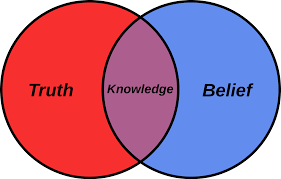
13. Time Out From English Grammar: “How the human brain establishes and reinforces beliefs as truths”


14. The Forum Lounge: “Once again, how to say 'Merry Christmas' in 75 of the world's languages”


15. The Forum Lounge: “A kid's view of the Christmas Story” (video on YouTube)


54
Getting to Know English / Making good use of free relative clauses
« Last post by Joe Carillo on December 17, 2024, 06:46:55 PM »
In the preceding discussion of relative clauses, we compared a bound modifier to an animal species that has already arrived at its evolutionary dead-end, and a free relative modifier to a species that partakes of a wide gene pool for its further evolution. This was in the context of the power of free relative clauses to expand ideas beyond the limits of the usual subject-verb-predicate format. We saw that while bound relative clauses simply affirm the identity of a subject noun, free relative clauses expand ideas in any way the writer or speaker deems suitable to his exposition.

There’s a handy guide for spotting the two—most bound relative clauses that refer to non-persons are introduced by “that,” while most free relative clauses that refer to non-persons are introduced by “which”: “The sedan that you delivered to me last week is a lousy clunker!” “That sedan, which you told me would be the best my money can buy, is a lousy clunker!” Notice how self-contained and peremptory the first sentence is, and how awkward it would be to add any more ideas to it (better to start all over again with a new sentence!).


In contrast, marvel at how the second sentence readily lends itself to further elaboration: “That sedan, which you told me would be the best my money can buy, which you bragged would give me the smoothest ride, and which you claimed would make me the most sophisticated-looking motorist in town, is a lousy clunker!” We can add even more “which” clauses to that sentence in direct proportion to the speaker’s anger and indignation, and still be sure that the speaker won’t be gasping for air when he gives vent to them.

We must be aware, though, that bound relative clauses are sometimes not that easy to spot in a sentence. Recall that we learned to routinely knock off “that” from relative clauses as part of our prose-streamlining regimen. Thus, the bound-clause-using sentence above would most likely present itself in this guise: “The sedan [that] you delivered to me last week is a lousy clunker!” This, as we know, is a neat disappearing act that “which” can oftentimes also do to link free relative clauses smoothly with main clauses.

But what really makes free relative clauses most valuable to prose is their ability to position themselves most anywhere in a sentence—at the beginning, in the middle, or at the tail end—with hardly any change in meaning; bound relative clauses simply can’t do that. We can better understand that semantic attribute by using three ways to combine sentences using the free-relative-clause construction technique. Take these two sentences: “The new junior executive has been very astute in his moves. He has been quietly working to form alliances with the various division managers.”

Our first construction puts the relative clause right at the beginning of the sentence: “Working quietly to form alliances with the various division managers, the new junior executive has been very astute in his moves.” The second puts it smack in the middle: “The new junior executive, working quietly to form alliances with the various division managers, has been very astute in his moves.” And the third puts it at the very tail end: “The new junior executive has been very astute in his moves, quietly working to form alliances with the various division managers.”

The wonder is that all three constructions yield elegant sentences that mean precisely the same thing—sentences that look, sound, and feel much better than when they are forced into bound-modifier straightjackets like this: “The new junior executive who is working quietly to form alliances with the various division managers has been very astute in his moves.”

We can see clearly now that free relative clauses work in much the same way as resumptive and summative modifier—they allow us to effortlessly extend the line of thought of a sentence without losing coherence and cohesion and without creating unsightly sprawl. However, free relative clauses differ from them in one major functional attribute: they specifically modify a subject of a particular verb.

In contrast, resumptive modifiers pick up any noun, verb, or adjective from a main clause and elaborate on them with relative clauses, while summative modifiers make a recap of what has been said in the previous clause and develop it with another line of thought altogether. Free relative clauses specifically need verbs to start off thoughts that elaborate on the subject of the main clause: “She loves me deeply, showing it in the way she moves, hinting it in the way she looks at me.”

We can attach more and more free relative clauses to that sentence, but the point has been made: using free relative clauses is—short of poetry—one of the closest ways we can ever get to achieving elegance in our prose.

This essay, which first appeared in my weekly column “English Plain and Simple” in The Manila Times, subsequently became Chapter 64 of my book Giving Your English the Winning Edge, ©2009 by the Manila Times Publishing Corp. All rights reserved.

Read this essay and listen to its voice recording in The Manila Times:
Making good use of free relative clauses

Next week:  Three semantic brides all in a row   (December 26, 2024)

Visit Jose Carillo’s English Forum, http://josecarilloforum.com. You can follow me on Facebook and X (Twitter) and e-mail me at j8carillo@yahoo.com.
55
For a well-deserved respite this Holiday Season, find time to read or reread six of my lighthearted essays that I have posted in the Forum over the years. They are:

1. “When a tremendously popular song legitimizes a grammatical atrocity”


2. “The State of Our English”


3. “When immodest medical jargon is used as a slogan”


4. “The disturbing high incidence of the faulty ‘taken cared of’ usage”


5. “Conversation: Do kingfishers eat butter?”


6. “My misgivings when people wish me more power”


Simply click their respective hyperlinks to start reading the essays.

Happy Holidays!

With my best wishes,
Joe Carillo
56
PLAYLIST UPDATE FOR DECEMBER 6 - 13, 2024 OF JOSE CARILLO ENGLISH FORUM’S FACEBOOK GATEWAY

Simply click the web links to the 15 featured English grammar refreshers and general interest stories this week along with selected postings published in the Forum in previous years:

1. Getting To Know English: “Crafting more elegant prose with free modifiers”


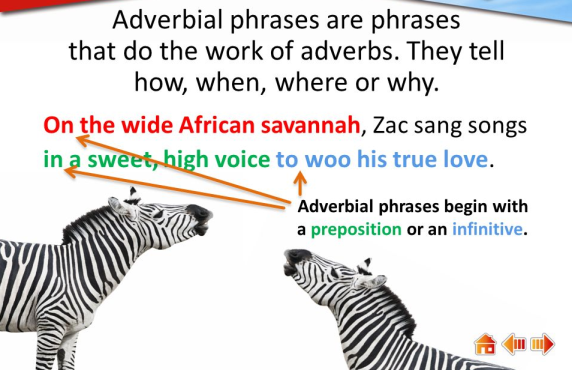
2. You Asked Me This Question: “How literal adverbial phrases differ from idiomatic ones”


3. Use and Misuse Retrospective: “Once more, on that rather tough subject-verb agreement question”


4. My Media English Watch: “Two exceptionally instructive cases of bad English in media”


ROADSIDE CARNIVAL AFTER ACCIDENT             SUCCESSFUL OVERSEAS FEMALE WORKERS


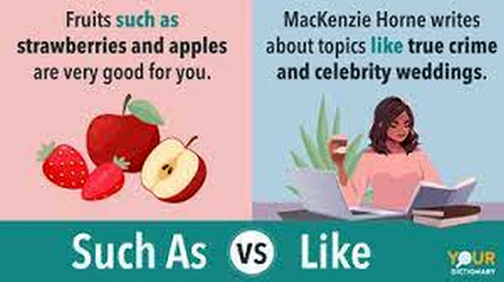
5. Essay by Jose A. Carillo: “‘Like’ and ‘such as’ are such slippery grammar trippers”


6. Getting To Know English: “Crafting our sentences to the desired context”


7. Students’ Sounding Board: “Confusion over the use of ‘due to’ and ‘owing to’”


8. Badly Written, Badly Spoken Retrospective: “In defense of using ‘Greetings!’ at the start of a letter”


9. Language Humor At Its Finest: “33 plays wyth wurds plus 33 philosophies of hypocrisy and ambiguity”


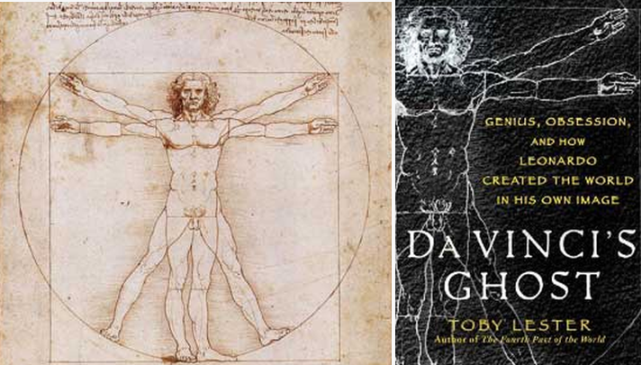
10. Time Out From English Grammar: “Measuring up to the human body’s perfection in architectural terms”


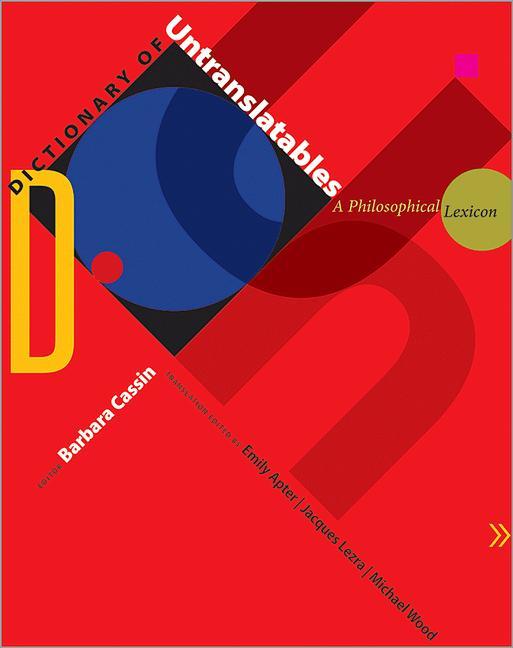
11. Readings in Language: “With this tome, few foreign thoughts and ideas need be lost in translation”


12. Your Thoughts Exactly: “10 Enduring Remembrances of Christmases Past”  


13. The Forum Lounge: “Once again, how to say ‘Merry Christmas’ in 75 of the world’s languages”


14. Your Thoughts Exactly: “Warmth of chilly December” by Maximo Tumbali, Forum Member


15. The Forum Lounge Retrospective: "33 golden nuggets of inspiration”


57
Getting to Know English / Crafting more elegant prose with free modifiers
« Last post by Joe Carillo on December 09, 2024, 07:58:42 PM »
To better appreciate the value of free modifiers, particularly of the kind that works in the same league as resumptive modifiers and summative modifiers, we must first survey the entire universe of modifiers in the English language. We will recall, to begin with, that there are two basic types of modifiers: the bound modifier and the free modifier. Bound modifiers are those that are essential to the meaning of a clause or sentence, as the relative clause “those that are essential to the meaning of the sentence” in this particular sentence is essential to its main clause. Without that relative clause, the main clause and the sentence itself cannot exist; all we will have is the meaningless fragment “bound modifiers are.”


On the other hand, in that same sentence, the free modifier is the long phrase that begins with “…as the relative clause” and ends with “…essential to its main clause.” We can knock it off and it will not even be missed in the sentence that will be left: “Bound modifiers are those that are essential to the meaning of a clause or sentence.” The sentence has shed off a substantial chunk of itself, of course, as a lizard might lose its tail and yet grow it again someday, but otherwise nothing serious or untoward has happened to its semantic health.

One distinctive feature of bound modifiers is that they are not set off from the rest of the sentence; they normally form an unbroken chain of words that ends with a period, or pauses with a comma or some other punctuation mark. Free modifiers, on the other hand, are set off by commas most of the time, as the comparative clause “a lizard might lose its tail and yet grow it again someday” finds itself hemmed in by two commas in the sentence we examined earlier. Not to have those two commas, or at least not to have one of them in what we will call their frontline acts, would make free modifiers such a disruptive nuisance or outright killers of sense and meaning.

Now that we are about to examine their semantic structures in detail, we might as well make a quick review now of the eight forms that free modifiers usually take to do their job. Those forms have familiar and largely self-explanatory names: subordinate clauses, infinitive phrases, verb clusters, noun clusters, adjective clusters, appositives, absolutes, and free relative clauses. To get a better perspective of them, let’s now look at sentences that use the various forms of free modifiers (shown in italics):

Subordinate clause: “You may leave now even if you haven’t finished your work yet.”

Infinitive phrase:To win this bout, you must knock him out in this round.”

Verb cluster, a crossover pattern that puts the “-ing” form of verbs into modifying-clause mode: “Taking the cue, the buffoon withdrew his candidacy.”

Noun cluster, a crossover pattern that puts the second noun from a main clause into modifying-clause mode: “A veteran of many campaign seasons, the aging politician knows the turf that well.” (Its basic, rather convoluted form: “The aging politician is a veteran of many campaign seasons who knows the turf that well.”)

Adjective cluster, a crossover pattern that puts an adjective or a verb’s past-participle form into modifying-clause mode: “Desperate over the taunts about her academic deficiencies, the woman withdrew her job application.”

Appositive, the nifty description that we insert between nouns and their verbs: “The widow, a pale ghost of her old self, wailed at her husband’s funeral.”

Absolute nominative, which puts the passive-voice verb into the “-ing” or past-participle form and knocks off the helping verb: “All hope gone, the soldier beat a hasty retreat.”

Free relative clause. We are deferring discussion of free relative clauses for last because we’ll be giving them much fuller treatment than the rest. There’s a special reason for giving them this much closer look. Free relative clauses, along with resumptive modifiers and summative modifiers, are actually among the most powerful tools available to us for achieving clarity and coherence as well as elegance in our prose.

We will first focus on the power of free relative clauses to expand ideas in a sentence way beyond the limits of the usual subject-verb-predicate format. As we already know, a bound modifier is limited to identifying the noun form that precedes or follows it in a clause, as in this example: “The Makati City executive with whom I had a heated traffic altercation last month is now my friend.”

The long italicized clause in the sentence above is actually a bound modifier that closes the sentence in an airtight loop. Every word in that clause is essential to its own meaning and that of the whole sentence. We can liken a bound modifier to an animal species that has already perfected itself genetically, thus arriving at its evolutionary dead-end. Free relative clauses, in contrast, form part of the wide gene pool of language that makes infinite permutations of thought possible.

We will explore that idea in greater detail in next week’s column. 

This essay, which first appeared in my weekly column “English Plain and Simple” in The Manila Times, subsequently became Chapter 63 of my book Giving Your English the Winning Edge, ©2009 by the Manila Times Publishing Corp. All rights reserved.
Read this essay and listen to its voice recording in The Manila Times:
Crafting more elegant prose with free modifiers

Next week: Making good use of free relative clauses   (December 19, 2024)

Visit Jose Carillo’s English Forum, http://josecarilloforum.com. You can follow me on Facebook and X (Twitter) and e-mail me at j8carillo@yahoo.com.
58
Your Thoughts Exactly / Of Things That Fly
« Last post by Joe Carillo on December 05, 2024, 07:00:01 AM »
Of Things That Fly
By Antonio Calipjo Go, Forum Contributor


I

Birds, what in Genesis 1:20 were called “winged fowl that fly above the earth in the open firmament of heaven,” were among the very first “moving creatures that hath life” made by God on the fifth day of His Labor, well before He even thought to create His magnum opus, Man. Birds are indeed among the most beautiful and fascinating of the many things that fly “across the face of the firmament of the heavens.”

Many other things fly. Bats are the only mammals that have achieved the awesome power to fly, but some animals that make their homes high up in the canopy of rain forests can move swiftly from tree to tree by gliding. These include the flying lemurs, lizards, geckos, frogs and squirrels.

Insects, with more than a million identified species, make up about five-sixths of all the animals on earth. They have spread to all corners of our planet, occupying all kinds of habitat from the driest deserts to the wettest jungles. Most insects—moths, butterflies, bees, hornets, houseflies, locusts and mosquitoes—are accomplished aviators.

There are seeds that “fly,” like the seeds of dandelions, thistles and pampas grass. A part of the seed coat of the mahogany seed, for instance, forms a sort of “wing” which enables the seed, when ripe, to whirligig away on the wind. All that’s needed is a puff of wind and the winged seeds of black pines, maples, and lindens are set sailing on the wind, which blows the seeds far from their parent trees, thus dispersing and propagating them.

II

Daedalus designed the labyrinth to contain and confine the monster Minotaur in the island of Crete. King Minos, upon learning that Daedalus showed Ariadne how Theseus could escape from it, imprisoned him and his son Icarus inside the labyrinth. The great inventor, knowing that escape was impossible by land or sea, devised a clever plan of escape by air. He made two pairs of wings for himself and his son and then they took flight, but not before warning his son to maintain a steady middle course over the sea, as flying too close to the sun will melt the glue and the wings will drop off. Being young and foolish, Icarus did not take heed but flew recklessly hither and yon, consequently falling to his death.
 
Since then, Man never did abandon his dream to conquer the skies. Over time, men who have no wings at all had been able to make aircraft and spacecraft that now reach far, very far places that no bird, bat or butterfly can ever hope to attain.

III

Things, intangible and unseen, fly about us just as well.

Rumor, gossip and hearsay flit, flutter, and fly in the breeze. Fibs, innuendos, half-truths, untruths and lies swarm, like the murmuration of birds. These vile evil things, sown by black dirty hands upon the wind, pull, draw and drag the whirlwind behind them, destroying reputations, besmirching names noble and neat, and snuffing out lives lived in honor and dignity. Gossip-mongers, tattletales, and purveyors of fake news are like witches and warlocks out on a rampage during Walpurgis Night*, bringing havoc and ruination upon the village, upon us all, as effectively and efficiently as airborne virus or pathogens.

IV

But thank God there are good things that hover above our heads. Memories, especially those imbued with a certain je ne sais quoi, are like hunting horns whose sad lugubrious sound slowly dies on the wind. Daydreams and reveries float on the air currents of our imagination. Our dreams, ambitions, desires and aspirations are like arrow prayers that we project and propel outward and skyward, in the hope they’d find their targets. Time, too, flies over us, unseen but ever-present, reminding us that we are as fleeting as flowers of the field. And, lastly, hope, the thing with feathers, lifts our souls to heaven and raises our spirits up to God.

Man is verily a fallen god who remembers the Heavens whence he came. Though his feet are dunked in the gutter, he never ceases to look up to gaze at the stars, straining to divine the divine message of the constellations. Who among us have not dreamt of being a bird or a butterfly? Who among us do not desire to grow wings, to soar and be absolved of our earthly roots?

God fixes us when we’re broken, glues back on to us the wings we’ve lost or discarded along our wayward way. Only men who have faith have wings that enable them to fly and escape the prisons they keep within themselves.

--------------------
Je ne sais quoi is a French phrase that means "I don't know what". It's used to describe a quality that's hard to put into words, but that makes something or someone special, attractive, or distinctive.
59
PLAYLIST UPDATE FOR NOVEMBER 30 - DECEMBER 5, 2024 OF JOSE CARILLO ENGLISH FORUM’S FACEBOOK GATEWAY

Simply click the web links to the 15 featured English grammar refreshers and general interest stories this week along with selected postings published in the Forum in previous years:

1. Getting to Know English: “The usefulness of summative modifiers”


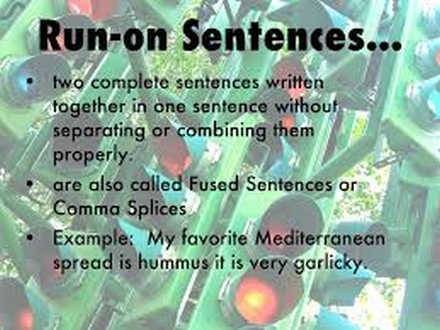
2. Use and Misuse Retrospective: “Fused sentences are very serious, very annoying grammar violations”


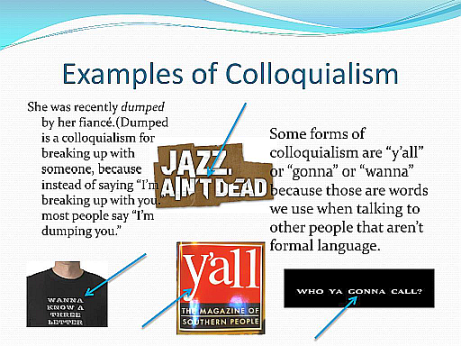
3. You Asked Me This Question: “Getting used to common English colloquialisms”


4. Badly Written, Badly Spoken: “Why use the phrase ‘in need of’ and why not drop ‘do’ in emphatic sentences?”


5. My Media English Watch Retrospective: “Cop out: When the passive voice is needed for clarity's sake”


6. Getting to Know English: “The curse of overloaded sentences”


7. Essay by Jose A. Carillo: “Writing to hook the reader”


8. Students’ Sounding Board: “An assortment of bewildering questions about English usage”


9. Language Humor at its Finest: “Memorable quotes from famous celebrities of yesteryears”


10. Advice and Dissent: “The Renaissance was a time of both literary creativity and military terror”  


11. Advice and Dissent: “Agnostic English philosopher bashes Richard Dawkins’ brand of atheism”


12. Time Out From English Grammar: “The immense power of the right habits to transform one’s life”


13. Your Thoughts Exactly: “Of Things That Fly,” meditations by Antonio Calipjo Go, Forum Contributor


14. The Forum Lounge: “Just a little bit of history about "The Twelve Days of Christmas”


15. The Forum Lounge: “Stories best savored on Christmas Day itself”


60
I posted on my FB page "Plain English: Special Program in Journalism and press conferences" a recap of the book "Bad Ideas About Writing" published by the West Virginia University. I used the phrase "Free, scholarly book ..." as part of my post title. But I keep remembering something I read that "adjectives of equal weight should not be separated by a comma."

Questions:

1. In the phrase "Free, scholarly book," are "free" and "scholarly" coordinate adjectives or cumulative adjectives?

Which is correct — "Free, scholarly book" or "Free scholarly book"?

2. Which is correct — "Long black hair" or "Long, black hair"?

If "Long black hair" (no comma between the adjectives) is correct because "long" and "hair" are cumulative adjectives, is it correct to say that "long" precedes "black" because of the Order of Adjectives? What relationship, if any, is there between cumulative adjectives and the Order of Adjectives?

P.S.

The book "Bad Ideas About Writing" says that the following are bad ideas:


"Teaching Grammar Improves Writing"

"Good Writers Must Know Grammatical Terminology"

"Grammar Should be Taught Separately as Rules to Learn"
Pages: 1 ... 4 5 [6] 7 8 ... 10