Recent Posts

Pages: 1 ... 3 4 [5] 6 7 ... 10
41
Read Between the Lies
By Antonio Calipjo Go, Forum Contributor   

Man’s insidious and malevolent propensity to lie is as old as time itself, beginning right at the very beginning, when the earth was still in the earliest cooling stages of its Creation. The ancestor of all liars is undoubtedly Cain, who lied to God Himself and feigned innocence when he was asked as to the whereabouts of his brother Abel, whom he had just then slain, retorting with that now infamous quote of his: “I do not know! Am I my brother’s keeper?”

Simon Peter, a disciple of Jesus, lied about his connection and relationship to his Master by denying, when he was challenged, that he knew Him, not once, not twice, but three times.

The Denial of Saint Peter, oil-on-canvas painting by Gerard Seghers, circa1620–25,
now held by the North Carolina Museum of Art (Google Image collection)

“Doubt, a Parable” won for the playwright John Patrick Shanley the coveted 2005 Pulitzer Prize for Drama. One of the main characters of the play, Father Brendan Flynn, delivers on one particular Sunday a sermon on the subject of gossip, narrating the story of a woman gutting a pillow on the rooftop of her house and letting the feathers fly every which way. He says that stopping gossip is like stuffing all the loose feathers back into the pillowcase, something that’s no longer possible to do. He ends his homily by admonishing his congregation to shun the practice of gossiping precisely because bearing false witness against neighbors ruins and destroys reputations and is therefore a sin. The slanderer differs from the assassin only in that he murders the reputation instead of the body.

Aren’t you amazed by the fact that the human tongue, just about four inches short and weighing much much less than Shylock’s pound of flesh, can kill a man six feet tall?

These are the many peoples of the lie--gossipmongers, talebearers, tattletales, yentas, maritesses and marisols, trolls--all, all of these repugnant and despicable scum coming out of the gutters in full force and overflowing confidence in this Age of Deep Fakes. They live among us, proliferating and spreading like airborne virus and free-floating pathogen.

Truth hurts, but it’s the lie that leaves indelible scars and pockmarks for keeps and for life. Chances are, at least twice in your life--once, if you’re lucky--town gossip will eventually catch up with you, no matter if you’ve just been a bit naughty or a lot nicer. If and when that happens, don't despair. A lie is still a lie, even if everyone believes it. The truth is still the truth, even if no one believes it. Always be mindful and watchful. Learn to read between the lies. Know that by following the long circuitous and convoluted trail of lies you will eventually arrive at the truth.

Lastly, be sure to heed the injunction of the Ninth Commandment--not to bear false witness against your neighbor. This is the truth that lies beneath every lie we let fly out. When you spit onto the wind, the wind will blow some of the spray back to you as a consequence of your wrongful and reckless act, your windblown feathers, your sin and your damnation.
42
Getting to Know English / Using extraposition for emphasis
« Last post by Joe Carillo on January 21, 2025, 10:00:05 PM »
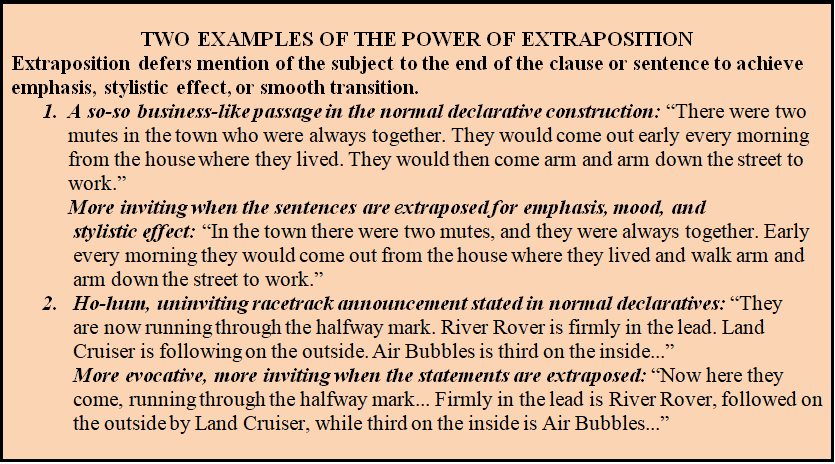
My previous two columns took up the use of the passive voice and of cleft sentences to draw attention to a particular aspect of the sentence that we want to emphasize. We saw that these constructions free us from the constricting tyranny of the active voice; with them we don’t have to spotlight the doer of the action when it’s really uncalled for or even undesirable. This time we will take up another construction that purposively disrupts the typical declarative order of sentences. It is extraposition, or the postponement of the subject until the end of the clause or sentence to achieve emphasis, stylistic effect, or smooth transition.


For more examples of the wide variety of extraposition devices that can enliven your prose, check out Richard Nordquist’s “Extraposition in Grammar” in the ThoughtCo. website, https://www.thoughtco.com/extraposition-grammar-term-1690626

Extraposition is particularly useful for creating mood and evoking atmosphere. Consider these opening lines of Carson McCuller’s novel, The Heart is a Lonely Hunter:

“In the town there were two mutes, and they were always together. Early every morning they would come out from the house where they lived and walk arm and arm down the street to work.”

In the first sentence, the subject “mute” was deferred to the end of the first clause, and the phrase “in the town” was used ahead of it to begin the sentence. In the second sentence, the phrase “early every morning” preceded the subject “they” to begin the first clause. The extrapositions here create a languorous storytelling atmosphere and tone, making it clear that the narrator will not be hurried, that she will tell the story in her own sweet time. Extraposition, in that sense, works as a literary pacing device.

Now see what happens when the extraposed sentences of the passage from The Heart is a Lonely Hunter are constructed in normal declaratives instead:

“There were two mutes in the town who were always together. They would come out early every morning from the house where they lived. They would then come arm and arm down the street to work.”

This time the cadence is hurried and businesslike, with the narrator evidently keen on getting done with the story as quickly as possible. The mechanical, almost wooden language has killed off the literary flavor of the original. It is, as many beginning writers soon discover, difficult to evoke feeling in literary exposition or prose narratives without ample use of extraposition.

This isn’t to say, however, that extraposition finds use only in literary writing. It’s also effective as a continuity or transitional device in extemporaneous speech, as in this racing spiel:

“Now here they come, running through the halfway mark... Firmly in the lead is River Rover, followed on the outside by Land Cruiser, while third on the inside is Air Bubbles...”

This language is obviously more evocative, more inviting than in this version in simple declaratives:

“They are now running through the halfway mark. River Rover is firmly in the lead. Land Cruiser is following on the outside. Air Bubbles is third on the inside...”

Extraposition also works wonders in spoken and written dialogue. It creates tension and faster transitions:

“Priority should be given to the Beta account, do you hear?”
“Are you telling me, sir, that you consider the Beta account more important than Alpha?
“More important, my dear fellow, is retaining our bread-and-butter account than pampering a high-profile but low-revenue one, don’t you see?”

See how lame each of the exchanges above becomes when done in simple declaratives:

“Didn’t you hear me? The Beta account should be given priority.”
“You consider the Beta account more important than Alpha? Is that what you are telling    me, sir?”
“My dear fellow, don’t you see? Retaining our bread-and-butter account is more important than pampering a high-profile but low-          revenue one.”

Another way of achieving extraposition is to introduce the subject of the sentence by an anticipatory “it,” as in these sentences: “It’s a wonderful thing to swim in the pool before breakfast.” “It wasn’t totally unexpected that the candidate would be disqualified.”

These extraposed sentences sound more natural than when constructed in the normal subject-verb-predicate pattern: “To swim in the pool before breakfast is a wonderful thing.” “That the candidate would be disqualified wasn’t totally unexpected.”

In some instances, in fact, extraposition is mandatory and not just a matter of style: “It looks like she won’t make it to the finish line this time.”

Its simple declarative version simply won’t work: “That she won’t make it to the finish line this time looks like.”

One caveat, though: extraposition that uses the anticipatory “it” isn’t the same as the “it” cleft. Recall that “it” cleft sentences take the tone and form of statements seeking to correct someone’s wrong idea, as in “It wasn’t us but the night-shift guys that left the backdoor open.”

In contrast, extraposition using the anticipatory “it” stands as a declaration all by itself, not one contravening an antecedent statement. Quite simply, it is a statement that draws attention to itself simply by avoiding the simple declarative route.

This essay, which first appeared in my weekly column “English Plain and Simple” in The Manila Times, subsequently became Chapter 69 of my book Giving Your English the Winning Edge, ©2009 by the Manila Times Publishing Corp. All rights reserved.

Read this essay and listen to its voice recording in The Manila Times:
Using extraposition for emphasis

Next week: The virtue of elliptical constructions   (January 23, 2025)

Visit Jose Carillo’s English Forum, http://josecarilloforum.com. You can follow me on Facebook and X (Twitter) and e-mail me at j8carillo@yahoo.com.
43
Your Thoughts Exactly / Smoke Gets in Your Eyes on New Year’s Eve
« Last post by Joe Carillo on January 15, 2025, 11:55:29 AM »
Smoke Gets in Your Eyes on New Year’s Eve
Personal Essay by Antonio Calipjo Go, Forum Contributor

The Old Year’s moment of leave-taking was nothing if not explosive, incendiary, and inflammatory. Altogether it was a loud, proud, one beautiful mess of an experience. New Year’s Eve 2025 was a send-off party, a demonstration of good wishes for someone or something that’s about to set out on a journey. The Old Year 2024 was, in fact, going away for good, never to return. Our fireworks displays were meant to see the year go off and go out in flamboyant flames. At the same time, we were ringing in the New Year, ushering in the start of 2025 A.D. by lighting and exploding firecrackers, rockets, pinwheels, Roman candles, and fountains that spout not water but flames.

For me, the cleaving of the years has always been a bittersweet encounter during which I find myself going through the motions of celebrating a death and a birth one after the other in very quick succession.

Gradually but eventually, all that sound and fury begin to signify nothing but smoke and the smell of something ending and dying, and in the hazy cold rainy morning after all get calm and not bright but foggy. So loud and clear, the sound of silence can now be heard all over the land. All that remains of the floral designs of varying colors in the previous night’s sky is our memory of the moment, our recollection of that turbulent event and experience.

With this in mind, I invariably return to recalling you, whom I had loved and lost and will never see again, no matter how hard I wish I may, or how desperately I wish I might.

At the beginning of the year, I resolve to forget you, every day from this day forward till the next breaking and breaching of the years, when I’d be making the same not-to-be-resolved resolution. I know it’s madness, something that I just have to do, for it makes me happy to be sad, to recall that singular experience when I loved only you and you loved only me.

It is like watching a fireworks display—you know that the joy of it will be brief and short—a rapture you know will only end in naught but grief and sorrow. There’s nothing you can do about it; it’s the way things are, for even despair is an experience worth keeping and remembering.

One goal of life is to collect experiences and memories of those experiences, and to realize what we’ve become because of them. The only thing that’s written in stone is that nothing lasts. Our remembrance of things past is akin to taking snapshots and photos that capture fleeting moments for all time, that render quick time experiences the hard permanence of fossils.

All that love is dead, yet something ineffable and unutterable lives and remains inside my heart and in my mind, calling and calling—like a foghorn blaring signals to ships in foggy weather such as this. Remembering is a process of resurrecting, of retrieving, and of redeeming memories from the fogbank of the past, of what was lost and could not be found, bringing all that’s dead to life, again and again, for as often as we want it, for as long as we want to.

We can only stage firework spectacles but not claim ownership of the light, sound, and noise they produce. We cannot possess what can, after all, burns, explodes, and is gone in the blink of an eye. We can only sense, we can only feel the instance and the moment of the blooming and blossoming of the fireworks against the night sky’s black velvet backdrop on New Year’s Eve.

We should not even think of owning or possessing what we truly love, for if you love what you have even for the briefest of time, you will have what you love for all time.


44
PLAYLIST UPDATE FOR JANUARY 11 - 17, 2025 OF JOSE CARILLO ENGLISH FORUM’S FACEBOOK GATEWAY

Simply click the web links to the 15 featured English grammar refreshers and general interest stories this week along with selected postings published in the Forum in previous years:

1. Getting to Know English: “Crafting our sentences to their context”


2. Use and Misuse: “A recurrent misuse of 'between' when setting a range”


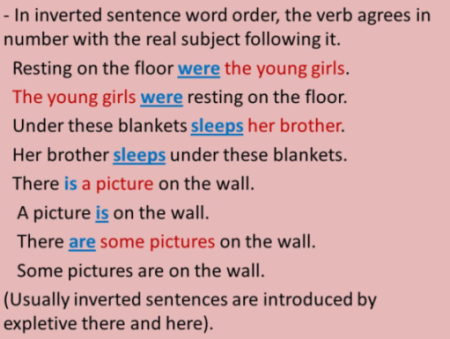
3. You Asked Me This Question: “Why do inverted sentences have a subject-verb agreement peculiarity?”


4. My Media English Watch Retrospective: “Two instructive cases of English misuse and suspected misuse"


5. Getting To Know English Better: “The grammar in English for avoiding blame”


6. Essays by Jose A. Carillo: “How onerous legalese imperils public welfare”


7. Education and Teaching: “DepEd engages Khan Academy and Frontliners to optimize English-Science-Math teaching in the Philippines”


8. Students' Sounding Board: “Cautionary tale on asserting what is good or bad English” 


9. Language Humor At Its Finest: “What the teacher says and what the teacher actually means”


10. Your Thoughts Exactly: “Smoke Gets in Your Eyes on New Year’s Eve," personal reminiscence by Antonio Calipjo Go, Forum Contributor


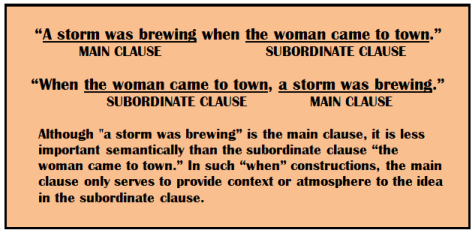
11. Going Deeper Into Language: “Subordinate clauses don't always play second fiddle to main clauses”


12. Advice and Dissent: “Belief without evidence to support it is always morally wrong”


13. Notable Works by Our Very Own: “When books and life intersect,” a personal retrospective by Howie Severino, Filipino broadcast journalist”


14. Time Out From English Grammar Retrospective: “How the West rose to global dominance and is now losing it,” preview of the 2011 book by British historian Niall Ferguson


15. A Forum Lounge Retrospective: “The one single thing that brought them all to America,” personal reminiscence of a South Vietnamese immigrant to the United States


45
The Department of Education (DepEd) recently started an organized training program for the country's English, science and mathematics (ESM) teachers and to optimize learning sessions for student learners and to enable their parents to support their school activities.

As part of DepEd's continuing efforts to improve learning outcomes, the training sessions are being undertaken in partnership with the U.S.-based Khan Academy, which offers classes with educational videos hosted on YouTube, and with FrontLearners, an interactive e-learning content developer and customized e-school solution provider in the Philippines. The program is expected to enable teachers to conduct learning sessions better, leading to improved academic performance aligned with international standards.

"We are equipping our teachers with cutting-edge tools and strategies to provide world-class instruction in English, Science, and Math. By empowering our educators, we are not only enhancing classroom learning but also preparing our learners to excel academically and meet the challenges of an ever-evolving world," Philippine Education Secretary Sonny Angara said.

The series of activities was started by DepEd last Jan. 6, 2025 by preparing Regional ESM supervisors to pattern their classes using the Khan Academy platform. The Khan Academy was created in 2006 by Sal Khan, a pioneering educator un the U.S. who holds three degrees from the Massachussets Institute of Technology and an MBA from Harvard University,

The Khan Academy is a non-profit organization and is mostly funded by donations from philanthropic organizations. Among its major donors since 2013 are Google, Mexico's  Luis Alcazar Foundation, AT&T, the Bill & Melinda Gates Foundation, and the Elon Musk Foundation. Khan Academy produces short video lessons that teach a wide spectrum of academic subjects, including mathematics, sciences, literature, history, and computer science. All resources are available for free to users of the website and the applications it offers.

Read "Department of Education to train English, science, math teachers" in The Manila Times online!

Clink this link to DepEd to get more information about the program!
46
Getting to Know English / Crafting our sentences to their context
« Last post by Joe Carillo on January 13, 2025, 04:13:43 PM »
My column last week (“When even the passive voice isn’t enough,” EPS #2238) further emphasized that our writing shouldn’t totally rely on the active voice, and that the passive voice is by itself a powerful device for precisely crafting our sentences to an intended context. The active voice is arguably a very handy and effective default vehicle for expressing our ideas, but the passive voice is actually our most suitable choice for calling attention and giving more emphasis to the receiver of the action, to the instrument used in the action, or to the action itself.

CHART 1 - BASIC ENGLISH CLAUSE PATTERN IN THE ACTIVE VOICE
                THREE BASIC CLAUSE PATTERNS IN THE PASSIVE VOICE

Again, let’s look closely at this basic English clause pattern: “Alicia [subject, as actor or doer of the action] gave [verb, as the action] Roberto [indirect object, as the beneficiary or receiver of the action], a tender hug [direct object, as the goal].” 

We already took up three ways by which the passive voice can change this basic clause pattern: (1) make the indirect object the subject of the sentence:Roberto was given a tender hug by Alicia.”; (2) make the direct object the subject:A tender hug was given by Alicia to Roberto.”; and (3) make the act itself the subject: “Alicia’s hugging of Roberto was tender.” The passive voice purposively diminishes the importance of the subject or actor so it can draw greater attention to the indirect or direct receivers of the action, or to the action itself.

CHART 2 – USEFULNESS OF THE PASSIVE VOICE IN SCIENCE 
                AND TECHNICAL WRITING

The passive voice becomes even more useful when it isn’t necessary or desirable to mention the subject or doer of the action at all. In science and technical writing, in particular, the passive voice is the conventional choice because the doer of the action is often obvious, unimportant, or unknown: “An intensive search for an antidote to the raging avian flu virus is underway.” The active voice, in contrast, gives unwarranted importance to the unknown doer of the action at the expense of what’s being done, which in this case is more important. For that reason, the following active-voice sentence looks cockeyed and sounds off-key: “Veterinary-disease researchers intensively seek an antidote to the raging avian flu virus.”

CHART 3 – USEFULNESS OF THE PASSIVE VOICE IN NEWS JOURNALISM

And the passive voice is, of course, not all that rare even in news journalism, the ultimate redoubt of the active voice. Take this self-conscious, active-voice news lead: “This reporter found out today that the complainants themselves in the Manila electioneering case had falsified evidence.” More circumspect and more logical is this passive construction that deliberately drops the reporter as the doer of the action: “The evidence in the Manila electioneering case was falsified by the complainants themselves.”

An even more compelling reason for using the passive voice has little to do with grammar but more with the art of communication itself. It’s the need for restraint, prudence, tact, and diplomacy in the workplace and in our day-to-day personal interactions. The active voice is particularly unsuitable for situations where it directly and unequivocally attributes an error, mistake, or failing to someone, thus squarely putting the blame on him or her. With the passive voice, we can be scrupulously correct without pointing an accusing finger at anybody, and deliberately keep certain things unstated to let others save face.

Assume, for instance, that your advertising agency has bungled its bid for a large consumer products account, and that the reason was that, at the last minute, your immediate superior doubled the budget you had recommended. This was mainly why the prospective client had chosen another agency whose proposed budget happened to be, well, about the same as your original figures. How injudicious it would be then for you to report the fiasco straightforwardly by using this active-voice statement: “We lost the account because my boss insisted on doubling the proposed budget that I had strongly recommended, which of course the prospective client found excessively high. The competing agency's winning bid turned out to be only half as ours.”

The active voice here, of course, tells one painful truth that won’t set you free—it is one, in fact, that’s guaranteed to instantly kill off careers and relationships. How much more politic and tactful to use the passive voice for that truth: “Our proposed budget for the advertising campaign was inadvertently doubled shortly before our presentation to client, thus making it twice the bid of the agency that won the account.” Everybody in your agency would know what really happened anyway, so there’s no need to rub it in by using the active voice so flagrantly.

The choice between the active voice and the passive voice, then, isn’t just a matter of grammar. It strikes at the heart of the matter of our use of the language itself.

This essay, which first appeared in my weekly column “English Plain and Simple” in The Manila Times, subsequently became Chapter 68 of my book Giving Your English the Winning Edge, ©2009 by the Manila Times Publishing Corp. All rights reserved.

Read this essay and listen to its voice recording in The Manila Times:
Crafting our sentences to their context

Next week: Using extraposition for emphasis     (January 23, 2025)

Visit Jose Carillo’s English Forum, http://josecarilloforum.com. You can follow me on Facebook and X (Twitter) and e-mail me at j8carillo@yahoo.com.
47
PLAYLIST UPDATE FOR JANUARY 4 - 10, 2025 OF JOSE CARILLO ENGLISH FORUM’S FACEBOOK GATEWAY

Simply click the web links to the 15 featured English grammar refreshers and general interest stories this week along with selected postings published in the Forum in previous years:

1. Getting to Know English: “When even the passive voice isn’t enough”


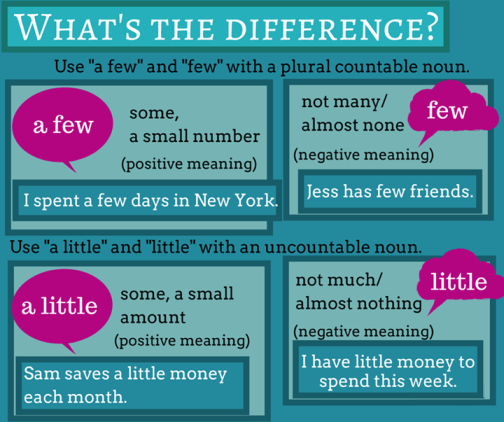
2. Use and Misuse: “Those troublesome modifiers of countable or uncountable nouns!”


3. Badly Written, Badly Spoken: “The difference between double possessives and single possessives”


4. You Asked Me This Question: “Precisely how do the English demonstrative pronouns work?”


5. Getting To Know English Better: “How to use ‘can’ and ‘could’ and ‘will’ and ‘would’ correctly”


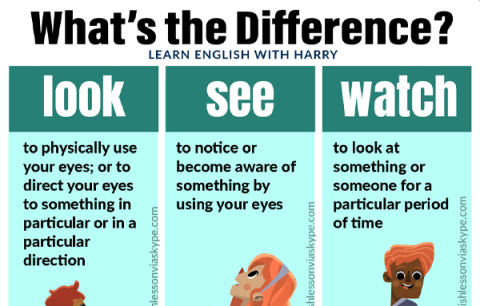
6. My Media English Watch: “The shade of difference between the verbs ‘look,’ ‘watch,’ and ‘see’”


7. Essay by Jose A. Carillo: “The battle for our minds”


8. Advocacies: “A toast to Pope Francis on his Philippine visit in 2015,” a recollection by Bukas Palad devotee Norman A. Agatep


9. Language Humor At Its Finest: “A cockeyed but penetrating definition of globalization”


10. Education and Teaching: “The language of literature and science,” a personal reminiscence by Jose A. Carillo


11. Time Out From English Grammar: “Bill Gates funds a developer of a feed additive that reduces cow burps and farts”


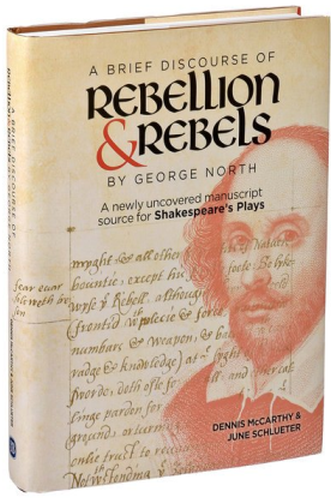
12. Readings in Language: “Self-taught scholar-researcher uncovers ‘inspiration’ for 11 of Shakespeare's plays”


13. A Forum Lounge Retrospective: “Even in the TV reality-show era, our ticket to fame is really making things”


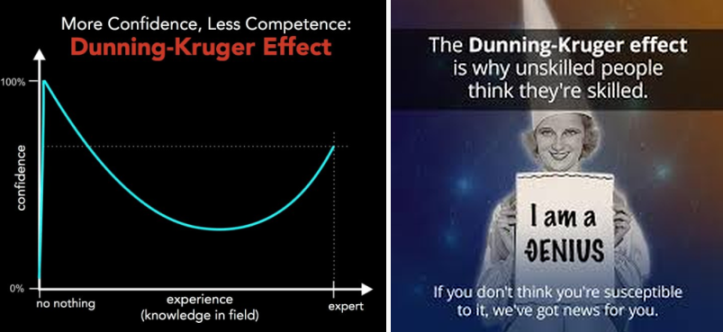
14. Students’ Sounding Board Retrospective: “What happens when people don’t know enough to know they don’t know”


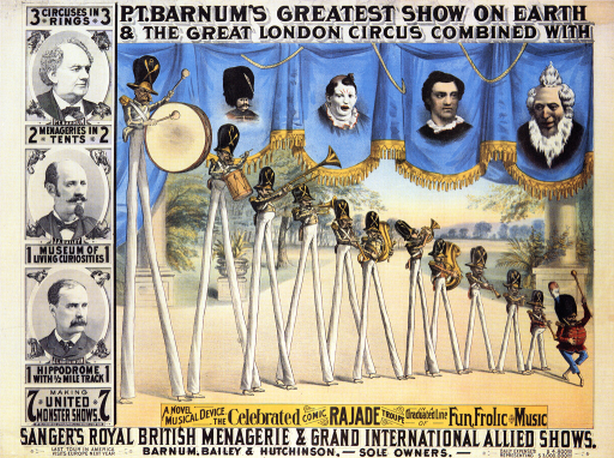
15. The Forum Lounge: “A bold embodiment of what’s grand or fraudulent in American mass culture”


48
PLAYLIST UPDATE FOR DECEMBER 28, 2024 - JANUARY 3, 2025 OF JOSE CARILLO ENGLISH FORUM’S FACEBOOK GATEWAY

Simply click the web links to the 15 featured English grammar refreshers and general interest stories this week along with selected postings published in the Forum in previous years:

1. Getting to Know English: “In defense of the passive voice”


PHOTO CREDIT: PH.PINTEREST.COM
A totally active-voice exposition is neither a practical nor desirable goal. An exposition that uses an unbroken train of
active sentences, without at least a few passive ones, is in many ways the equivalent of speaking stridently at all times
or of singing a song on a high note from start to finish. We all know how exhausting this can be for both the performer
and the audience.


2. Use and Misuse: “Getting rid of wordy beginnings for our writing”


3. Badly Written, Badly Spoken: “The difference between double possessives and single possessives”


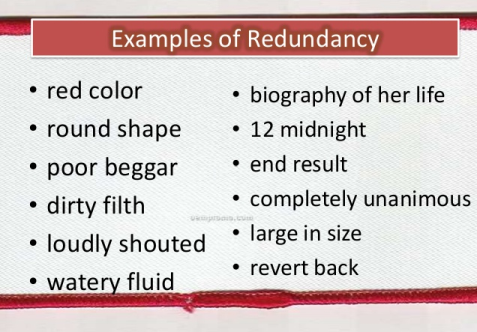
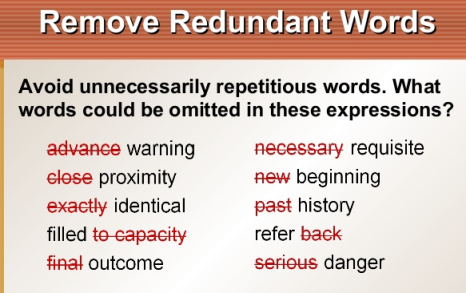
4. You Asked Me This Question: “Redundancies, imprecisions in mass media English”


5. My Media English Watch Retrospective: “Let’s be firm on whether the name ‘Philippines’ is singular or plural“


6. Getting to Know English Better: “How the three kinds of objects work in English grammar”


7. Essay by Jose A. Carillo: “The Tree of Life, aka The Tree of Knowledge”


8. Education and Teaching: “The rocky road to idiomatic English”


9. Language Humor at its Finest: “18 classic quotes for the New Year”


10. Time Out From English Grammar: “Applying evolutionary science to improve the human condition”


11. Students’ Sounding Board Retrospective: “When is sentence inversion a matter of grammar or style?”


12. A Forum Lounge Retrospective: “The roller coaster ride of my life” by APA.VICTORY (pseud.)


13. The Forum Lounge: “Pun-ography: Wordplay to make you smile”


14. The Forum Lounge: “Stunning and magically beautiful sights from all over the world


15. The Forum Lounge Retrospective: “Sissel Kyrkjebø sings "Auld Lang Syne" for New Year 2014 ”


49
Getting to Know English / When even the passive voice isn’t enough
« Last post by Joe Carillo on December 31, 2024, 07:51:55 PM »
There are times when we just feel that even the passive voice falls short of giving us the desired emphasis for what we want to say. That’s when we take recourse to a peculiar grammar device that we learn at a very early age probably without even realizing it. That device is the cleft sentence, so-called because it “cleaves” or splits a single-clause sentence into two clauses for semantic emphasis or style. It is the written equivalent of making our voice louder to draw attention to the most important points of what we are saying.


Cleft sentences take two common forms. The first is the “it”-cleft, which exhibits the pattern “It + be + [subject of focus] + [action or defining clause],” as in “It was the accusers themselves who fudged the data.” The other is the pseudo-cleft or “wh-”cleft, which normally takes the form “Wh- + [subject] + [verb] + [form of be] + [rest of the predicate],” as in “What she did was a wonderful thing.” Both forms depart from the usual declarative sentence form to achieve a stronger, defensive emphasis. (The straightforward form of the “it” cleft is, of course, “The accusers themselves fudged the data”; that of the “wh-” cleft, “She did a wonderful thing.”)   

The “it” cleft. In this type of sentence construction, the often-derided and supposedly empty function word “it” works to highlight an object of special focus, or theme. In the process, the sentence assumes the tone and form of a statement seeking to correct someone’s wrong idea. The negator “no” or “not,” if unstated, can normally be presumed to precede it. For instance, someone may have just said this pointedly: “The accused, Your Honor, fudged the data.” The defensive—perhaps outraged—reply would likely be an “it”-cleft: “No, Your Honor, it was the accusers themselves who fudged the data.”

An “it”-cleft sentence always has a dependent clause introduced by the subordinators “that” or “who” or by none at all, and that dependent clause normally ends the sentence for emphasis: It was her that I wanted all along.” “It is Alberto who can make things possible for us.” “No, my dear, it is our son sleeping on the sofa.” By some peculiar language alchemy, the “it”-cleft achieves a double emphasis—one for the cleft’s theme, and the other for the chosen end-focus. In the examples above, it is the following idea-pairs that get emphasis: “her”/“I wanted all along”; “Alberto”/“can make things possible for us”; and “our son”/“sleeping on the sofa.”    

Like the plain passive-voice construction, the “it”-cleft gives wide latitude in emphasizing any of the following grammar elements in the scheme of things: ihe actor or doer of the action, the indirect or direct object, or the act itself. Take this simple declarative statement: “The judge gave the erring lawyer a sharp rebuke.” Now look at just three of the “it”-cleft forms that sentence could take: “It was the judge that gave the erring lawyer a sharp rebuke.” “It was the erring lawyer that the judge sharply rebuked.” “It was a sharp rebuke that the erring lawyer got from the judge.” All revolve around the same idea, but with different shades of meaning.

The pseudo-cleft or “wh-”cleft. This construction takes both the main verb and theme (main idea) of the sentence, fashions them into a noun clause, and uses that noun clause to begin the sentence. Instead of  “it,” however, the pseudo-cleft uses “what” to introduce that clause.

By alchemy similar to the “it”-cleft’s, the pseudo-cleft allows us to create several variations of a statement to emphasize a different theme each time. See what the pseudo-cleft can do to a simple declarative like, say, “We brought Eve some luscious fruits.”

Emphasizing the direct object (“luscious fruits”) from the doer’s (“we”) standpoint:What we brought to Eve were luscious fruits.”

Emphasizing the direct object from the doer’s standpoint, but less assertively:What were brought by us to Eve were luscious fruits.”
 
Emphasizing the action:What we did was to bring luscious fruits to Eve.”

Emphasizing all the elements:What happened was that we brought luscious fruits to Eve.”

Note that a “wh-”cleft theme is always a subordinate clause introduced by “what,” and is always the subject of a passive-voice sentence.

Clefts are potent, high-energy devices for achieving greater emphasis, but we must use them with restraint—certainly not as habitual forms of expressing ourselves. To overuse them is to trivialize not only the very things we want to emphasize but the rest of our composition as well.

This essay, which first appeared in my weekly column “English Plain and Simple” in The Manila Times, subsequently became Chapter 67 of my book Giving Your English the Winning Edge, ©2009 by the Manila Times Publishing Corp. All rights reserved.

Read this essay and listen to its voice recording in The Manila Times:
When even the passive voice isn’t enough

Next week: Crafting our sentences to their context     (January 16, 2025)

Visit Jose Carillo’s English Forum, http://josecarilloforum.com. You can follow me on Facebook and X (Twitter) and e-mail me at j8carillo@yahoo.com.
50
December 30, 2024

Dear Forum Member and Friend,


Happy Holidays and a Prosperous New Year to Your Family and Friends!

Today, on the occasion of Dr. Jose P. Rizal's execution by colonial Spain's firing squad on December 30, 1896, the Forum is presenting this retrospective of major vignettes and sidelights about his remarkable life as posted in Jose Carillo's English Forum in recent years.


1. Students’ Sounding Board: “Did Rizal ever speak and write in English?" (January 28, 2010)

2. The Forum Lounge: “A Rizal retrospective on his 160th birth anniversary" (June 18, 2019)

3. Watch and Listen: “A declamation by Ed Manuel Song (June 23, 2008) of Jose Rizal’s ‘Mi Ultimo Adios’ in the original Spanish”

4. A Book Review: “An anthology that’s a one-stop shop for everything Rizal” (December 28, 2018)

5. A Charming Related Story: “‘A Prayer to St. Jude’, reminiscence by Forum Member Angel Casillan”(January 23, 2011)

I trust that will enjoy these readings about or related to the life of our National Hero.

With my best wishes,
Joe Carillo
Pages: 1 ... 3 4 [5] 6 7 ... 10