Recent Posts

Pages: 1 2 3 [4] 5 6 ... 10
31
Getting to Know English / Using inversion for smooth transitions
« Last post by Joe Carillo on February 04, 2025, 05:57:11 PM »
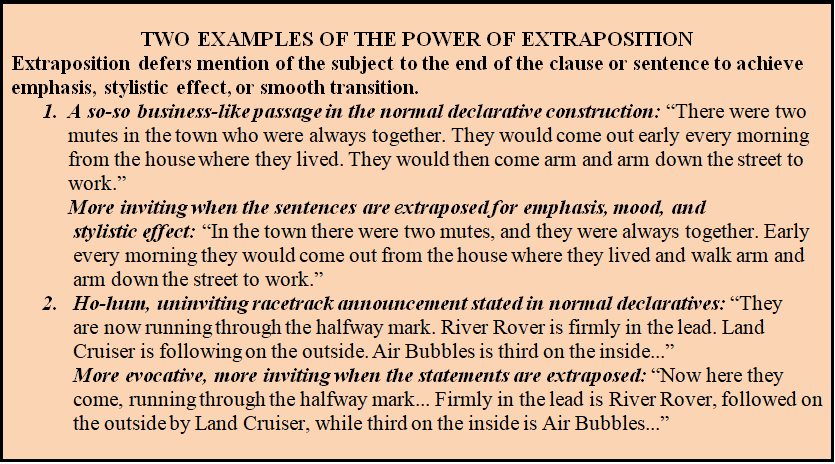
Apart from extraposition, or deferring the subject to the tail end of a clause or sentence, there’s still another sentence pattern that purposively disrupts the usual declarative form to achieve emphasis and better sentence transitions. That pattern is called inversion. It puts a prepositional phrase, adverbial phrase, adjectival phrase, or participial phrase at the beginning of the sentence—ahead of its subject—then puts an intransitive verb after it, as in this construction: “In no other way could the Filipino’s voting behavior be understood.”

Inversion differs somewhat from extraposition, which deliberately postpones the subject until the end of the clause or sentence for emphasis: “In no other way could we understand the Filipino’s voting behavior.” Inversion is more specialized, often used as a continuity device to ensure a smooth, logical transition from one sentence to the next.


Consider this passage where the second and third sentences depart from the normal subject-verb-predicate construction:

“We are not lacking in political talents with the requisite education, expertise, and vision to propel our country to greatness. But so warped by the broadcast entertainment media is our mindset that we put a higher level of trust on popular entertainers than on legitimate, level-headed leaders. Looming larger in our minds is the instant gratification of our imaginary desires by celluloid or video heroes than real, long-term solutions to our national problems by truly competent aspirants to public office.”

We can see inversion at work when the second sentence leads off with the adjectival phrase “but so warped by the broadcast entertainment media is our mindset,” whose normal declarative form is “our mindset is so warped by the broadcast entertainment media.” The same is true in the third sentence, which leads off with the participial phrase “looming larger in our minds is the instant gratification of our imaginary desires” instead of the normal declarative, “the instant gratification of our imaginary desires by celluloid or video heroes looms larger in our minds.”

The effect of the twin inversions is a logical, clearer transition of ideas from one sentence to the next—better than if all three sentences were in this simple declarative form:

“We are not lacking in political talents with the requisite education, expertise, and vision to propel our country to greatness. Our mindset, however, is so warped by the broadcast entertainment media that we put a higher level of trust on popular entertainers than on legitimate, level-headed leaders. The instant gratification of our imaginary desires by celluloid or video heroes looms larger in our minds than real, long-term solutions to our problems by truly competent aspirants to public office.”

Note that in the inversion-free pattern, the transition between the first sentence and the non-inverted second sentence still works adequately, but that between the second and the third is fuzzy and weak. The link, so to speak, has been lost in transition. Inverted sentences usually do much better than simple declaratives in making such links.

But inversion, like the other sentence constructions that subvert the normal declarative form, has its limits. It works badly when used to make abrupt transitions to ideas not specifically taken up in preceding sentences. See how it falters in doing its job in this passage:

“You are talented and you work hard to finish a college education. In the art of management and governance you hone yourself assiduously. From out of nowhere comes a popular upstart, unschooled in both the academic disciplines and governance, telling you that he is much more fit for public office than you are.

So craggy are the inversions above that they simply don’t work. Only when the antecedent ideas are established clearly beforehand, in fact, does inversion function well:

“You are talented, work hard to finish a college education, and hone yourself assiduously in the art of management and governance. Then all of a sudden and from out of nowhere comes a popular upstart, unschooled in both the academic disciplines and governance, telling you that he is much more fit for public office than you are.”

There’s another clear and present danger when we construct inverted sentences: the higher probability of our verbs failing to agree in number with the subjects of our inverts. So always remember this rule: in inverted sentences, the number of the subject must follow that of the verb, not that of the noun or pronoun that intervenes or comes before it. Take, for instance, this somewhat poetic invert: “To the dark recesses of public office go the scoundrels for their last refuge.”

At first glance it would seem that the plural verb form “go” should be the singular “goes” instead so it can agree with the singular “public office.” A closer look, however, shows that the true subject of the invert is not “public office”—nor even “dark recesses”—but the plural “scoundrels.”

Indeed, using inversion for smooth transition demands eternal vigilance in maintaining subject-verb agreement in the inverted sentence.

This essay, which first appeared in my weekly column “English Plain and Simple” in The Manila Times, subsequently became Chapter 71 of my book Giving Your English the Winning Edge, ©2009 by the Manila Times Publishing Corp. All rights reserved.

Read this essay and listen to its voice recording in The Manila Times:
Using inversion for smooth transitions

Next week: Inverted sentences as transitional devices     (February 13, 2025)

Visit Jose Carillo’s English Forum, http://josecarilloforum.com. You can follow me on Facebook and X (Twitter) and e-mail me at j8carillo@yahoo.com.
32
GET A STRONGER GRASP OF FREQUENT ENGLISH GRAMMAR MISUSES
(Second of a weekly series)                                                            February 4, 2025

To further reinforce your English grammar footing in 2025, Jose Carillo’s English Forum is running every Tuesday starting last January 28, 2025 a series of very common English grammar misuses even by not just a few of its native speakers. This week we’ll continue the series by clarifying six more such misuses from about 480 that have been taken up in the Forum’s Use and Misuse board over the years, mostly in response to questions raised by Forum members and readers.

7. “The glaring superfluity of the phrase ‘regarding with your concern’”


In May 2022 Forum Member LTG, operations manager of a Philippine business process outsourcing company (BPO), asked the Forum for advice on how to curb the habitual use by some people of the phrase “regarding with your concern,” in such sentences as “Let me take over and provide you with some updates regarding with your concern. The issue when connecting your Paypal account is a known ..." 


My reply: The preposition "regarding" means "concerning" or "about," so it's obviously superfluous to use "regarding" again in the phrase "regarding with your concern." I thus suggested that ever so gently, he should encourage users of that tautologous phrase to simply replace "regarding" with "about," making it "about your concern" instead. Admittedly, I gave this advice against "regarding with your concern" solely due to its superfluity gaffe, unaware of how much more widespread its usage was elsewhere in in the world. Take a look at this snapshot above of a Google check that I subsequently did after my reply to LTG.

8. “Misuse of a comma for linking two independent coordinate clauses”

Question posted by Reli Elijah Aguilar in my Facebook Messenger board on October 30, 2018: “Hello, sir. I’m confused by this line from a book, “I’m not angry with you, I’m angry with myself.” Is this an example of a comma splice? That statement is composed of two independent clauses, so why did the author use a comma?”


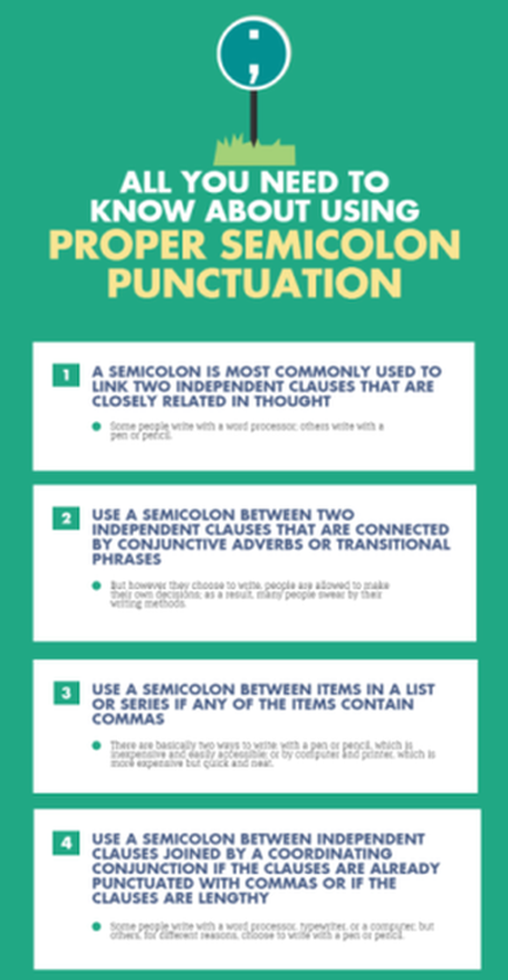
My reply to Reli: Strictly speaking, the construction “I’m not angry with you, I’m angry with myself” is a comma splice as you’ve surmised. You’re correct that since what are being linked are two independent coordinate clauses,  the correct punctuation between them is a semicolon: “I’m not angry with you; I’m angry with myself.” In colloquial usage, though, particularly in conversations in narrative fiction, using the semicolon to link such coordinate clauses looks too excruciatingly formal. This is why not a few writers are tempted punctuate them with a comma without feeling guilty at all of any grammar violation.

9. “Those troublesome modifiers of countable or uncountable nouns!”

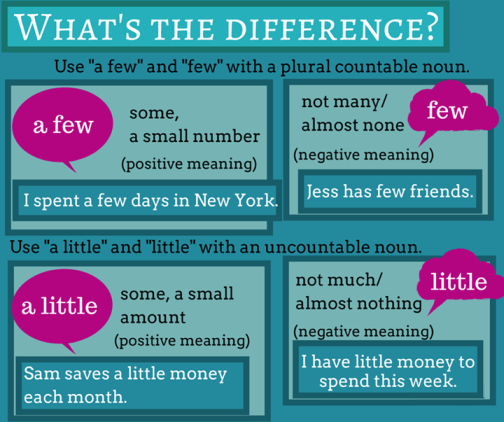
Question posted by Forum member Coolpipes in my Facebook Messenger board in May 2018: With this grammar item that I came across, I am torn between “a few” and “few.” I am guessing that “few” is the right answer. I am not 100% sure though: “It was wonderful, ____ could have done what he did.” (little, a little, a few, few)


My reply to Coolpipes: You guessed right about “few.” It’s the right word for the sentence that you presented: “It was wonderful; few could have done what he did.” Take note though that the correct punctuation between the clauses “It was wonderful” and “few could have done what he did” is a semicolon rather than a comma. This is because the two are independent clauses not connected by any conjunction; the logic of the statement they create can only be inferred. The comma is inadequate to punctuate the two clauses, resulting in what’s known as a comma splice or a fused sentence.

10. “Why the object in a sentence needn’t follow the verb 'told'”

A note sent to the Forum many years ago by an English-language speech specialist of a Makati City-based language institute who doubted the grammatical correctness of this sentence construction of mine: “That reminds me of an anecdote told to me by one of my staff”: “Isn’t it that when using the word ‘tell,’ it must be followed by a direct personal object? I went to several English grammar websites to make sure they all said the same thing, and they did. So your sentence should be: ‘That reminds me of an anecdote one of my staff told me.’ I could be wrong, though.”


My reply: Like the more common expression “a story told to me by . . .”, the form “an anecdote told to me by . . .” is not only grammatically and structurally correct but also widely accepted usage. As proof, I called her attention to the standard attribution given for articles or stories of someone written by another person. That standard attribution goes as follows: “(title of article) by (author) as told to (writer),” as in “‘My Life as a Recluse’ by Juan de la Cruz as told to Susan Reyes'.”

This usage clearly shows that the verb “tell” need not be followed by a direct object. Indeed, in the form “an anecdote told to me by…”, “told” is actually an intransitive verb in the passive past tense form acting on the object of the preposition “to,” and that object is, of course, the pronoun “me.”


11. “Common pitfalls in constructing negative ‘used to’ sentences”

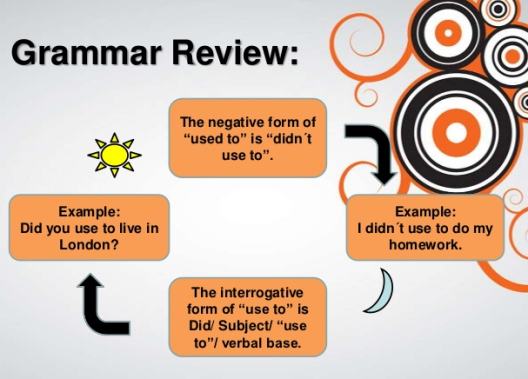
Most of us feel comfortable with using the form “used to + verb” for a past condition or habitual practice, as in these sentences: “They used to be very close friends.” “She used to jog early in the morning.” In the first, “used to” conveys the idea of a past activity or condition that’s no longer true; in the second, “used to” conveys the idea of an old habit that had already stopped. In both cases, we’re hardly in any danger of stumbling in our grammar because “used to” is clearly functioning as it should—as an auxiliary verb affirming the sense of a past action or state of affairs that had already ceased.


But using “used to” in negative and interrogative statements, which both require the form to take the auxiliary verb “did,” raises serious questions about its grammatical validity. Indeed, how should the two “used to” sentences above be rendered in the negative? For the first, do we say, “They didn’t used to be very close friends” (“used” with the “d”) or “They didn’t use to be very close friends” (“use” without the “d”)? And for the second, do we say, “She didn’t used to jog early in the morning” or “She didn’t use to jog early in the morning”?

Then again, how do we put the two “used to” sentences in question form? For the first, do we say, “Did they used to be very close friends?” or “Did they use to be very close friends?” And for the second, do we say, “Did she used to jog early in the morning?” or “Did she use to jog early in the morning?”

The American English prescription is straightforward: take out the “d” from the verb in “used to” when this form works with the auxiliary verb “did” in negative and interrogative statements. Thus, the correct usage for negative “used to” statements is “They didn’t use to be very close friends,” and for questions, “Did they use to be very close friends?”


12. “The difference between ‘seeing’ and ‘watching’ a movie”

Forum member Sky posted this question in the Forum sometime in 2012: “Do these two sentences have the same meaning? ‘I am seeing a movie tonight.’ ‘I am watching a movie tonight.’ “An American friend of mine said that ‘seeing’ and ‘watching’ aren’t interchangeable at all even in the sense of the two sentences above.


My reply in a subsequent July 2017 Forum posting: I think that strictly speaking, your American friend is correct in saying that the verbs “seeing” and “watching” are not interchangeable in the two sentences you presented. The sense of “I am seeing a movie tonight” is that of going out of one’s way to watch that movie somewhere; one usually has to go to a theater to watch it—as a passive spectator among several others. In contrast, “I am watching a movie tonight” conveys the sense of viewing it on one’s own accord and without going out of one’s way to do so; in this case, viewing it is more likely a solitary act in the privacy of one’s home, perhaps on broadcast television, DVD, or YouTube.

Watch out for the 3rd of this series next Tuesday (February 11, 2025)!
33
GET A STRONGER GRASP OF FREQUENT ENGLISH GRAMMAR MISUSES
(Second of a weekly series)                                                                   February 4, 2025

To further reinforce your English grammar footing in 2025, Jose Carillo’s English Forum is running every Tuesday starting January 28, 2025 a series of very common English grammar misuses even by not just a few of its native speakers. This week we’ll continue  the series with clarifying six more such misuses from about 480 that have been taken up in the Forum’s Use and Misuse board over the years, mostly in response to questions raised by Forum members and readers.

7. “The glaring superfluity of the phrase ‘regarding with your concern’”

In May 2022 Forum Member LTG, operations manager of a Philippine business process outsourcing company (BPO), asked the Forum for advice on how to curb the habitual use by some people of the phrase “regarding with your concern.”   


My reply: The preposition "regarding" means "concerning" or "about," so it's obviously superfluous to use "regarding" again in the phrase "regarding with your concern." I thus suggested that ever so gently, he should encourage users of that tautologous phrase to simply replace "regarding" with "about," making it "about your concern" instead.

Admittedly, I gave this advice against "regarding with your concern" solely from the its superfluity gaffe, unaware of how much more widespread its usage was elsewhere in in the world. Take a look at this snapshot above of a Google check that I subsequently did after my reply to LTG.


8. “Misuse of a comma for linking two independent coordinate clauses”

Question posted by Reli Elijah Aguilar in my Facebook Messenger board on October 30, 2018: Hello, sir. I’m confused by this line from a book, “I’m not angry with you, I’m angry with myself.” Is this an example of a comma splice? That statement is composed of two independent clauses, so why did the author use a comma?”


My reply to Reli: Strictly speaking, the construction “I’m not angry with you, I’m angry with myself” is a comma splice as you’ve surmised. You’re correct that since what are being linked are two independent coordinate clauses,  the correct punctuation between them is a semicolon: “I’m not angry with you; I’m angry with myself.” In colloquial usage, though, particularly in conversations in narrative fiction, using the semicolon to link such coordinate clauses looks too excruciatingly formal. This is why not a few writers are tempted punctuate them with a comma without feeling guilty at all of any grammar violation.

9. “Those troublesome modifiers of countable or uncountable nouns!”

Question posted by Forum member Coolpipes in my Facebook Messenger board in May 2018:
With this grammar item that I came across, I am torn between “a few” and “few.” I am guessing that “few” is the right answer. I am not 100% sure though: “It was wonderful, ____ could have done what he did.” (little, a little, a few, few)

Image: few&afew-little&alittle-1A.png

My reply to Coolpipes: You guessed right about “few.” It’s the right word for the sentence that you presented: “It was wonderful; few could have done what he did.” Take note though that the correct punctuation between the clauses “It was wonderful” and “few could have done what he did” is a semicolon rather than a comma. This is because the two are independent clauses not connected by any conjunction; the logic of the statement they create can only be inferred. The comma is inadequate to punctuate the two clauses, resulting in what’s known as a comma splice or a fused sentence.

10. “Why in a sentence, an object needn’t follow the verb “told”
https://josecarilloforum.com/forum/index.php?topic=7535.0

A note many years ago from an English-language speech specialist of a Makati City-based language institute who doubted the grammatical correctness of this sentence construction of mine: “That reminds me of an anecdote told to me by one of my staff”: “Isn’t it that when using the word ‘tell,’ it must be followed by a direct personal object? I went to several English grammar websites to make sure they all said the same thing, and they did. So your sentence should be: ‘That reminds me of an anecdote one of my staff told me.’ I could be wrong, though.”

Image: as-told-to_composite-1A2.png

My reply: Like the more common expression “a story told to me by . . .”, the form “an anecdote told to me by . . .” is not only grammatically and structurally correct but also widely accepted usage. As proof, I called her attention to the standard attribution given for articles or stories of someone written by another person. That standard attribution goes as follows: “(title of article) by (author) as told to (writer),” as in “‘My Life as a Recluse’ by Juan de la Cruz as told to Susan Reyes.”

This usage clearly shows that the verb “tell” need not be followed by a direct object. Indeed, in the form “an anecdote told to me by…”, “told” is actually an intransitive verb in the passive past tense form acting on the object of the preposition “to,” and that object is, of course, the pronoun “me.”

11. “Common pitfalls in constructing negative ‘used to’ sentences”
https://josecarilloforum.com/forum/index.php?topic=7387.0

Most of us feel comfortable with using the form “used to + verb” for a past condition or habitual practice, as in these sentences: “They used to be very close friends.” “She used to jog early in the morning.” In the first, “used to” conveys the idea of a past activity or condition that’s no longer true; in the second, “used to” conveys the idea of an old habit that had already stopped. In both cases, we’re hardly in any danger of stumbling in our grammar because “used to” is clearly functioning as it should—as an auxiliary verb affirming the sense of a past action or state of affairs that had already ceased.

Image: used-to_american-english-1A.png
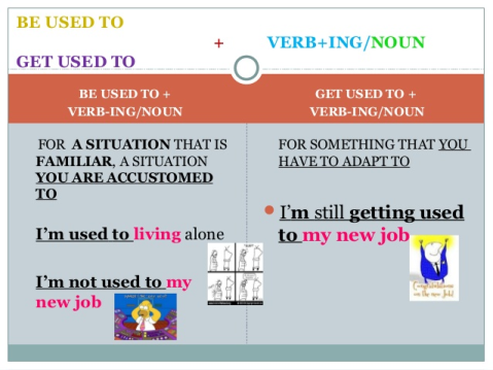
            be-used-to_usage-1A.png

But using “used to” in negative and interrogative statements, which both require the form to take the auxiliary verb “did,” raises serious questions about its grammatical validity. Indeed, how should the two “used to” sentences above be rendered in the negative? For the first, do we say, “They didn’t used to be very close friends” (“used” with the “d”) or “They didn’t use to be very close friends” (“use” without the “d”)? And for the second, do we say, “She didn’t used to jog early in the morning” or “She didn’t use to jog early in the morning”?

Then again, how do we put the two “used to” sentences in question form? For the first, do we say, “Did they used to be very close friends?” or “Did they use to be very close friends?” And for the second, do we say, “Did she used to jog early in the morning?” or “Did she use to jog early in the morning?”

The American English prescription is straightforward: take out the “d” from the verb in “used to” when this form works with the auxiliary verb “did” in negative and interrogative statements. Thus, the correct usage for negative “used to” statements is “They didn’t use to be very close friends,” and for questions, “Did they use to be very close friends?”

12. “The difference between ‘seeing’ and ‘watching’ a movie”
https://josecarilloforum.com/forum/index.php?topic=6952.0

Forum member Sky posted this question sometime in 2012: “Do these two sentences have the same meaning? ‘I am seeing a movie tonight.’ ‘I am watching a movie tonight.’ “An American friend of mine said that ‘seeing’ and ‘watching’ aren’t interchangeable at all even in the sense of the two sentences above.

Image: seeing-movies-viewers-1C.jpg
            seeing-movies-viewers-2B.jpg

My reply in a subsequent July 2017 Forum posting: I think that strictly speaking, your American friend is correct in saying that the verbs “seeing” and “watching” are not interchangeable in the two sentences you presented. The sense of “I am seeing a movie tonight” is that of going out of one’s way to watch that movie somewhere; one usually has to go to a theater to watch it—as a passive spectator among several others. In contrast, “I am watching a movie tonight” conveys the sense of viewing it on one’s own accord and without going out of one’s way to do so; in this case, viewing it is more likely a solitary act in the privacy of one’s home, perhaps on broadcast television, DVD, or YouTube.


Watch out for the 3rd of this series next Tuesday (February 11, 2025)!
34
PLAYLIST UPDATE FOR JANUARY 25 - 31, 2025 OF JOSE CARILLO ENGLISH FORUM’S FACEBOOK GATEWAY

Simply click the web links to the 15 featured English grammar refreshers and general interest stories this week along with selected postings published in the Forum in previous years:

1. Getting to Know English: “The virtue of elliptical constructions”


2. Students’ Sounding Board: “The semantic difference between the present and the past tense”


3. You Asked Me This Question: “What is the origin of the word ‘gaslighting’ and other questions”


4. My Media English Watch Retrospective: “Usage of the phrase ‘on the ground’ in official circles getting out of hand”


5. Getting to Know English Retrospective: “When it is desirable to position adjectives postpositively”


6. Essay by Jose A. Carillo: Retrospective: “Using grammar as a tool for persuasion”


7. Use and Misuse: “Backshifting rule on relative clause”


8. Your Thoughts Exactly: “Mind Matters!”, personal reflections by Melvin (pseud.), Forum Member


9. Language Humor at its Finest: “19 things it took me 50 years to learn by U.S. columnist Dave Barry”  


10. Time Out from English Grammar: “The high cost of granting computers dominion over our work and leisure,” a 2014 review of Nicolas Carr's book The Glass Cage: Where Automation is Taking Us in the Boston Globe website


11. Advocacies: “Plain Language, Plain English, Clear Writing for the Philippines,” a retrospective to Forum Contributor Gerry T. Galacio's series of Forum postings in 2017
 

12. Education and Teaching: “Philippine Congress approves proposed Education Pathways Act”


13. Going Deeper Into Language: “When faulty logic overrides good grammar and semantics”


14. Advice and Dissent Retrospective: “A descriptivist’s grand tour of how languages work,” a review of David Crystal's 2005 book How Language Works: How Babies Babble, Words Change Meaning, and Languages Live or Die


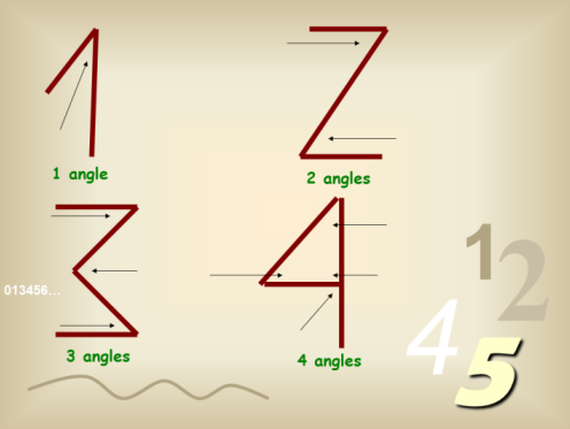
15. A Forum Lounge Retrospective: “Why the Arabic numbers look the way they do,” an interesting factoid and audio-visual presentation shared by Forum Contributor Frank A. Tucker


35
The Philippine House of Representatives recently approved on third and final reading the proposed Education Pathways Act mandates a choice between these two education pathways for students upon completing Junior High School--the University Preparatory Program under the Department of Education (DepEd) or the Technical-Vocational Program under the Technical Education and Skills Development Authority (Tesda).

Upon completion of the full technical-vocational program, the learner "may enroll in colleges or universities and avail of the ladderized education program for educational advancement."

The measure, House Bill 11213, hurdled third and final reading with 200 lawmakers voting for its passage.

Read "Education Pathways Act gets nod" in the online edition of the January 30, 2025 issue The Manila Times!
36
Getting to Know English / The virtue of elliptical constructions
« Last post by Joe Carillo on January 29, 2025, 01:25:47 PM »
Often in our English-language readings, we come across sentences that have certain words evidently missing yet surprisingly read right and sound right as well: “Those who wish to [...] can very well join me.” “The youngest staff in the office is as competent as the eldest [...].” “If she wants more of those 1905 coins, my brother can give her plenty [...].” In each instance, although a noun and a verb have been shed off somewhere, the sentences prove to be grammatically and semantically correct. They are, in fact, none the worse for the grammatical holes in them.

As suggested by the three periods enclosed by brackets, each of those grammatical holes is an ellipsis, and the sentences where they occur are called elliptical sentences. We can say that elliptical sentences reflect the natural aversion of humans to unnecessarily repeat themselves. The elliptical sentences shown above, for instance, are simply more concise constructions of these sentences: “Those who wish to join me can very well join me.” “The youngest staff in the office is as competent as the eldest staff in the office.” “If she wants more of those 1905-issue coins, my brother can give her plenty of those 1905-issue coins.”


By now the pattern and logic of elliptical constructions should be clear: they gracefully knock off repetitive words and phrases. The ellipsis takes it for granted that the reader would just mentally fill in the gaps with the missing grammatical elements.
As a rule, elliptical sentences consist of two independent clauses, one containing the grammar elements the other has left out. The independent clause with the missing elements is the elliptical clause—an abbreviated adverb clause stripped of its subject and verb.

Consider this sentence: “Although she is known for her ravishing beauty, Cornelia has an uncommonly vile temper.” Its adverb clause is “she is known for her ravishing beauty,” with “although” as subordinating marker; the independent clause is “Cornelia has an uncommonly vile temper.” Now see what happens when we make the adverb clause elliptical: “Although […] known for her ravishing beauty, Cornelia has an uncommonly vile temper.” Even after shedding “she is,” the sentence works just fine—more concise and emphatic, in fact, than the scrupulously complete one.

Ellipses can streamline sentences in many ways. Here are some of the common elliptical forms we’ll usually encounter in our English-language readings:

(1) The routine omission of “that” in modifying clauses, particularly in spoken English. This is the most familiar use of the ellipsis. Example: “They knew […] two years would be the shortest time […] they would need to subdue the enemy forces.” (Normal form: “They knew that two years would be the shortest time that they would need to subdue the enemy forces.”) Tongues are normally averse to wagging too many “that’s.”

(2) Elliptical noun phrases. Example: “Jennifer asked for the pink blouse but the salesclerk gave her the red […].” (Normal form: “Jennifer asked for the pink blouse but the salesclerk gave her the red blouse.”) Quite naturally, the disciplined mind resists the need to belabor the obvious.

(3) Ellipsis of the verb and its objects or complements. Example: “The beleaguered Supreme Court chief justice would fight it to the very end if he could […].” (Normal form: “The beleaguered Supreme Court chief justice would fight it to the very end if he could fight it to the very end.”)

(4) Medial (middle) ellipsis.  Example: “Arlene will take care of the girls and Eduardo […], the boys.” (Normal form: “Arlene will take care of the girls and Eduardo will take care of the boys.”) This fine ellipsis separates sophisticated English-language users from rank beginners.

(5) Ellipsis of clause. Examples: “They can leave now if they want to […].” (Normal form: “They can leave now if they want to leave now.”) Certain elliptical clauses, however, need a comma to indicate that some words have been intentionally left out; otherwise, confusion might arise. Properly elliptical: “My tour group chose Paris; theirs, Rome.” Improperly elliptical: “My tour group chose Paris; theirs Rome.” (Normal form: “My tour group chose Paris; their group chose Rome.”)

(6) Ellipsis when words are left out in comparisons using “that” or “as.”  This is the trickiest ellipsis of all because we need to first establish the correct pronoun by filling in the missing words in the elliptical clause. Consider these two sentences: “Helen loves you more than I.” “Helen loves you more than me.” Gut feel tells us that only one of them is grammatically correct, but both actually are. For each of the sentences, in fact, we can fill in the missing words in a different way. The first turns out to be the elliptical construction of “Helen loves you more than I love you”; the second, of “Helen loves you more than she loves me.” Each is as grammatically and semantically airtight as the other.

Isn’t it nice that with the ellipsis, we can have it short and sweet both ways?

This essay, which first appeared in my weekly column “English Plain and Simple” in The Manila Times, subsequently became Chapter 70 of my book Giving Your English the Winning Edge, ©2009 by the Manila Times Publishing Corp. All rights reserved.

Read this essay and listen to its voice recording in The Manila Times:
The virtue of elliptical constructions

Next week: Using inversion for smooth transitions   (February 6, 2025)

Visit Jose Carillo’s English Forum, http://josecarilloforum.com. You can follow me on Facebook and X (Twitter) and e-mail me at j8carillo@yahoo.com.
37
Site Announcements / Get a stronger grasp of frequent English grammar misuses
« Last post by Joe Carillo on January 27, 2025, 10:02:21 PM »
GET A STRONGER GRASP OF FREQUENT ENGLISH GRAMMAR MISUSES

To further reinforce your English grammar footing in 2025, Jose Carillo’s English Forum will run every Tuesday starting today (January 28, 2025) a series of very common English grammar misuse even by not just a few of its native speakers. We’ll start with six such misuses from about 480 that have been taken up in the Forum’s Use and Misuse board over the years, mostly in response to questions raised by Forum members and readers.

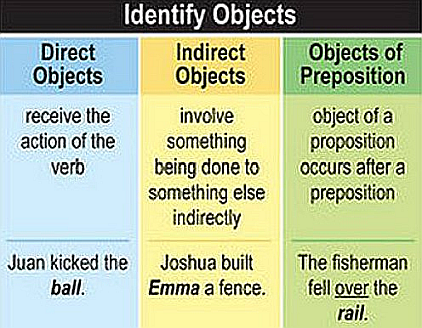
1. “The workings of the three kinds of grammatical objects in English”


After reading a Forum posting about English noun clauses in October 2014, Forum member Ivan Ivanov raised these baffling questions: What specifically is the function of the pronoun “me” in these three sentences—“She gave it to me,” “She did it for me.” “She told me about her dog.” In each, is “me” working as a direct object, an indirect object, or an object of the preposition?
 
2. “Differentiating the use of ‘than of’ and ‘than that of’”


Forum Member Forces20 asked in March 2017: “When should ‘than that of’ be used instead of ‘than of’? Consider this sentence: “As a teacher, his salary is even less than that of a driver.’ Why shouldn’t this sentence be written instead as “As a teacher, his salary is even less than of a driver’?

3. “Should the word ‘each’ always be treated as singular no matter how it is positioned or used in a sentence?”


This is a persistent usage notion that I myself got stuck with in the past—one that at one time I even recommended in the Forum as the right thing. However, as I discovered much, much later when I looked deeper into the subject, this rule gets completely overturned when “each”, working as an adjective, comes before—not after—a plural subject. This caveat is provided by the American Heritage Dictionary of the English Language and by the Random House Dictionary, and likewise by the Oxford Dictionary in its example for “each” as a determiner.

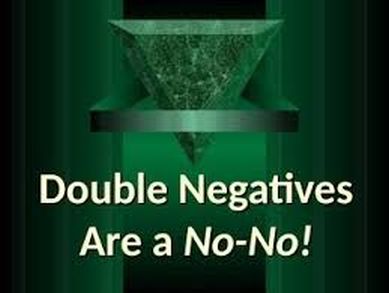
4. “The perils of using double negative constructions”


Due to the irrational fear that I might be haled to court for doing so, I rarely yield to the temptation of correcting the written English of lawyers. In December 2013, however, I couldn’t let pass this awful double negative construction in a Filipino lawyer’s provocative rant posted in a newspaper opinion section: “No law (or anything lower than that) cannot be passed by the Congress to prevent or suppress our right to communication and free speech...”

Read my critique of that sentence in the Forum.


5. “Wrong or willfully violated mall parking signs in English”


Sometime in April 2017, right after I parked my car facing the wall in the basement of a then still unfinished extension of a shopping mall in Mandaluyong City, a guard tapped my side window and asked me to park the other way around. I remonstrated against that demand because the signage on the wall couldn’t have been clearer—“PLEASE PARK FACING THE WALL”—but the guard politely insisted. He explained in Tagalog that he was just enforcing management’s order, pointing to the rows of cars that were all parked facing away from the wall. The contradiction grated on my nerves so I critiqued that blatantly wrong parking signage soon after in the Forum.

6. The need to avoid confusing fused or run-on sentences

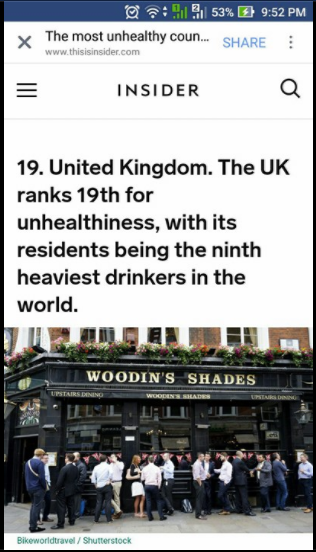
In January 2018 Forum member GlorHate sent to the Forum the photo below and asked: “I am just wondering why there’s a comma after ‘unhealthiness’ (in the attached poster statement).”


My reply: That statement says “19. United Kingdom. The UK ranks 19th for unhealthiness, with its residents being the ninth heaviest drinkers in the world. Take note that the prepositional phrase “with its residents being the ninth heaviest drinkers in the world” is intended to modify the whole main clause before it and not just the preceding word “unhealthiness” right before it. The comma right after that prepositional phrase provides soft punctuation, both visually and audibly, to demarcate that main clause from that modifying phrase. Without that comma, the result would be a confusing fused or run-on sentence.
 
Watch out for the next set of English Use and Misuse lessons and insights next Monday (February 3, 2025)!
38
GET A STRONGER GRASP OF FREQUENT ENGLISH GRAMMAR MISUSES
(First of a weekly series)

To further reinforce your English grammar footing in 2025, Jose Carillo’s English Forum will run every Tuesday starting today (January 28, 2025) a series of very common English grammar misuse even by not just a few of its native speakers. We’ll start with six such misuses from about 480 that have been taken up in the Forum’s Use and Misuse board over the years, mostly in response to questions raised by Forum members and readers.

1. “The workings of the three kinds of grammatical objects in English”


After reading a Forum posting about English noun clauses in October 2014, Forum member Ivan Ivanov raised these baffling questions: What specifically is the function of the pronoun “me” in these three sentences—“She gave it to me,” “She did it for me.” “She told me about her dog.” In each, is “me” working as a direct object, an indirect object, or an object of the preposition?
 
2. “Differentiating the use of ‘than of’ and ‘than that of’”


Forum Member Forces20 asked in March 2017: “When should ‘than that of’ be used instead of ‘than of’? Consider this sentence: “As a teacher, his salary is even less than that of a driver.’ Why shouldn’t this sentence be written instead as “As a teacher, his salary is even less than of a driver’?

3. “Should the word ‘each’ always be treated as singular no matter how it is positioned or used in a sentence?”


This is a persistent usage notion that I myself got stuck with in the past—one that at one time I even recommended in the Forum as the right thing. However, as I discovered much, much later when I looked deeper into the subject, this rule gets completely overturned when “each,” working as an adjective, comes before—not after—a plural subject. This caveat is provided by the American Heritage Dictionary of the English Language and by the Random House Dictionary, and likewise by the Oxford Dictionary in its example for “each” as a determiner.
 
4. “The perils of using double negative constructions”


Due to the irrational fear that I might be haled to court for doing so, I rarely yield to the temptation of correcting the written English of lawyers. In December 2013, however, I couldn’t let pass this awful double negative construction in a Filipino lawyer’s provocative rant posted in a newspaper opinion section: “No law (or anything lower than that) cannot be passed by the Congress to prevent or suppress our right to communication and free speech...”

Read my critique of that sentence in the Forum.


5. “Wrong or willfully violated mall parking signs in English”



Sometime in April 2017, right after I parked my car facing the wall in the basement of a then still unfinished extension of a shopping mall in Mandaluyong City, a guard tapped my side window and asked me to park the other way around. I remonstrated against that demand because the signage on the wall couldn’t have been clearer—“PLEASE PARK FACING THE WALL”—but the guard politely insisted. He explained in Tagalog that he was just enforcing management’s order, pointing to the rows of cars that were all parked facing away from the wall. The contradiction grated on my nerves so I critiqued that blatantly wrong parking signage soon after in the Forum.

6. The need to avoid confusing fused or run-on sentences

In January 2018 Forum member GlorHate sent to the Forum the photo below and asked: “I am just wondering why there’s a comma after ‘unhealthiness’ (in the attached poster statement).”


My reply: That statement says “19. United Kingdom. The UK ranks 19th for unhealthiness, with its residents being the ninth heaviest drinkers in the world. Take note that the prepositional phrase “with its residents being the ninth heaviest drinkers in the world” is intended to modify the whole main clause before it and not just the preceding word “unhealthiness” right before it. The comma right after that prepositional phrase provides soft punctuation, both visually and audibly, to demarcate that main clause from that modifying phrase. Without that comma, the result would be a confusing fused or run-on sentence.
 
Watch out for the next set of English Use and Misuse lessons and insights on Tuesday (February 4, 2025)!
39
PLAYLIST UPDATE FOR JANUARY 18 - 24, 2025 OF JOSE CARILLO ENGLISH FORUM’S FACEBOOK GATEWAY

Simply click the web links to the 15 featured English grammar refreshers and general interest stories this week along with selected postings published in the Forum in previous years:

1. Getting to Know English: “Using extraposition for emphasis”


2. Use and Misuse: “A curious encounter about the use of position titles”


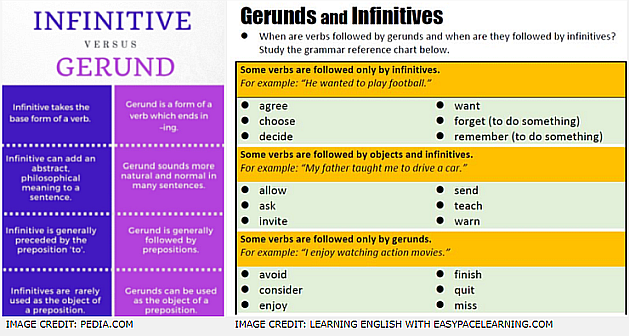
3. You Asked Me This Question: “Do we play it by ear whether to use an infinitive or gerund?”


4. My Media English Watch Retrospective: “A crash course in politically correct English"


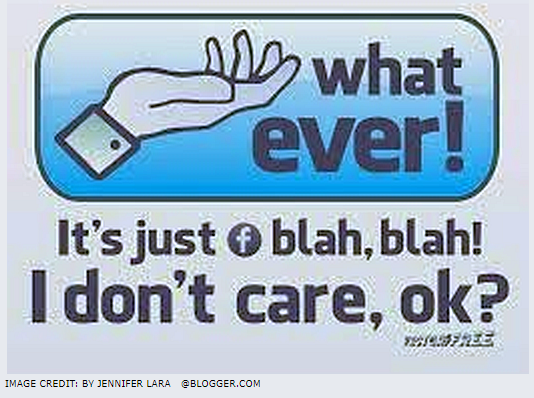
5. Getting to Know English: “The problem with ‘Hello!’ and ‘Whatever!’”


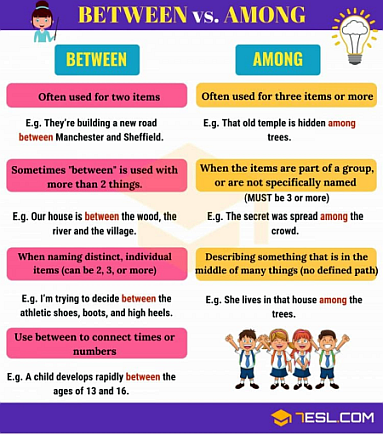
6. Essay by Jose A. Carillo: “My hunch was right about the usage of ‘between’ and ‘among’”


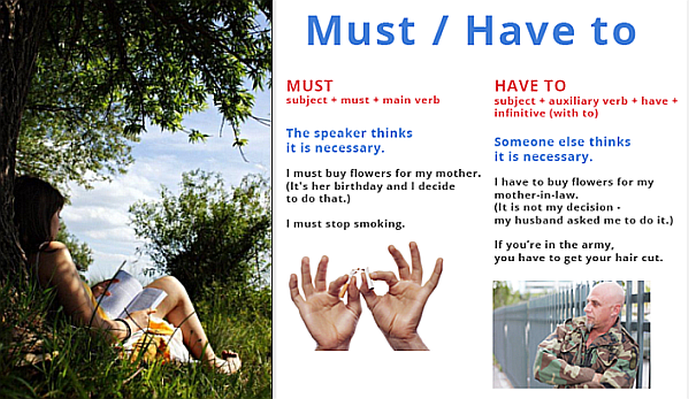
7. Students’ Sounding Board: “Does ‘have to’ mean the same thing as the modal auxiliary verb ‘must’?”


8. Your Thoughts Exactly: “Read Between the Lies,” Essay by Antonio Calipjo Go, Forum Contributor


9. Language Humor at its Finest: “Getting a squiggly yet very instructive hang of world history”  


10. Time Out from English Grammar: “What the evolution of rove beetles shows about the predictability of life,” Deena Mousa's article “The Evolution of a Mimic” in the January 17, 2025 issue of the Nautilus website


11. Education and Teaching: “Looking back to important discussions on education posted in the Forum in 2009”

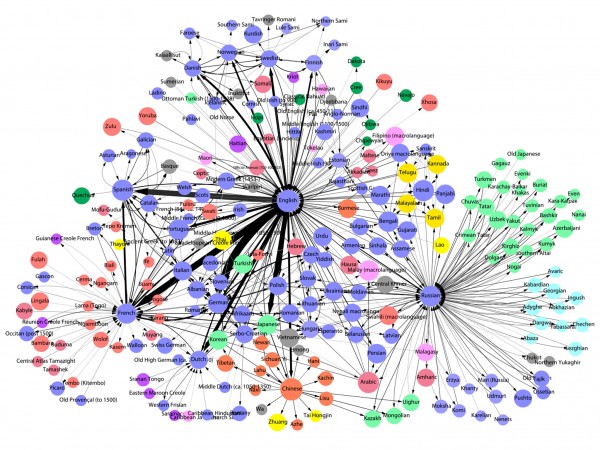
12. Readings in Language: “The best languages to speak if you want to influence the world” (2014)


13. Advice and Dissent: “Color doesn’t inhabit the physical world but only exists in the beholder's eyes”


14. A Forum Lounge Retrospective: “On English and Esperanto as bridging languages in multilingual countries,” a lively multinational online symposium in the Forum in 2009 following the formal launching of my third book, Give Your English the Winning Edge


15. A Forum Lounge Retrospective: “What happened during your birth year?” A delightful surprise treat sent to the Forum 25 years ago by Forum contributor Ben Sanchez


40
Rove beetles are not ants, but their bodies look uncannily like ants; some have adopted ant-like behaviors such as grooming or participating in raids, and still others give off the same chemical signals that ants do. And across many millions of years, at least a dozen distinct lineages of these rove beetles have independently evolved what's known as convergent evolution--the ability to mimic to deceive ants to treat rove beetles as their own, enabling rove beetles to infiltrate ant colonies for food and sometimes even eat young ants.


These findings were reported by Joseph Parker, an evolutionary biologist at the California Institute of Technology and a MacArthur grantee, who has spent his career investigating rove beetles and was able to construct their evolutionary trees that reveal multiple independent transitions from free-living to symbiotic lifestyles.

Parker says about rove beetles: “It’s very unusual that they independently evolved many different ant-like features over time. [These] provide a paradigm for understanding how new kinds of ecological relationships between species emerge during evolution.”

Read Deena Mousa's article "The Evolution of a Mimic" in the January 17, 2025 issue of the Nautilus website now! https://nautil.us/the-evolution-of-a-mimic-1182904/?utm_campaign=website&utm_medium=email&utm_source=nautilus-newsletter
Pages: 1 2 3 [4] 5 6 ... 10